

Zoom the image with the mouse
#1701
1976 13c Nativity
$0.65
Share:
U.S. #1701
1976 13¢ Nativity
Traditional Christmas
Traditional Christmas
Issue Date: October 27, 1976
City: Boston, MA
Quantity: 809,955,000
Printed By: Bureau of Engraving and Printing
Printing Method: Photogravure
Perforations: 11
Color: Multicolored
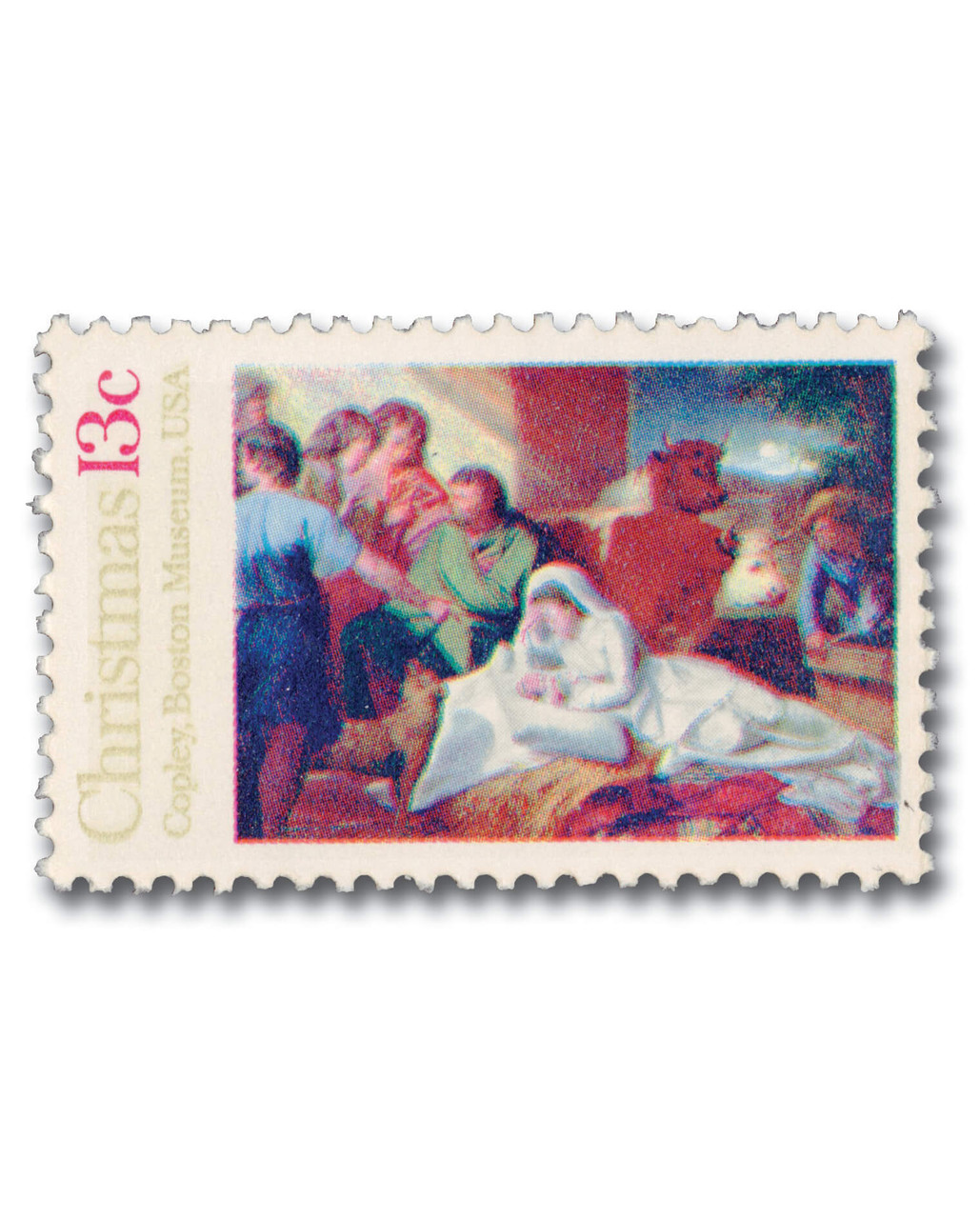
Issued on October 27, 1976, in Boston — a fitting first day city given the painting's home — this 13-cent stamp reproduces John Singleton Copley's Nativity, painted in about 1776 and held in Boston's Museum of Fine Arts. The timing was not accidental: the stamp appeared exactly two centuries after the painting was created, making it a quiet double anniversary. The stamp was designed by Bradbury Thompson, one of the most accomplished graphic designers in U.S. postal history, and was printed on the Bureau of Engraving and Printing's seven-color Andreotti gravure press in sheets of 200, distributed as panes of 50.
Copley is best known as a portraitist — one of the finest Colonial-era painters America produced — and the Nativity is among his very few religious works. It is the only Madonna and Child he is known to have painted, which gives the subject a singular place in his body of work. Born in Boston in 1738, Copley left for England in 1774, just before the Revolution, and never returned. The Nativity was painted during his years abroad, yet it found its permanent home back in the city where his career began.
The 1976 Christmas issue also included a companion stamp (Scott #1702) featuring a Nathaniel Currier lithograph of a winter scene, giving collectors two distinct holiday subjects from the same issue date. This traditional stamp, with its roots in an American masterwork painted exactly 200 years before its postal debut, is a natural choice for collectors of U.S. Christmas issues or American art on stamps.
U.S. #1701
1976 13¢ Nativity
Traditional Christmas
Traditional Christmas
Issue Date: October 27, 1976
City: Boston, MA
Quantity: 809,955,000
Printed By: Bureau of Engraving and Printing
Printing Method: Photogravure
Perforations: 11
Color: Multicolored
Issued on October 27, 1976, in Boston — a fitting first day city given the painting's home — this 13-cent stamp reproduces John Singleton Copley's Nativity, painted in about 1776 and held in Boston's Museum of Fine Arts. The timing was not accidental: the stamp appeared exactly two centuries after the painting was created, making it a quiet double anniversary. The stamp was designed by Bradbury Thompson, one of the most accomplished graphic designers in U.S. postal history, and was printed on the Bureau of Engraving and Printing's seven-color Andreotti gravure press in sheets of 200, distributed as panes of 50.
Copley is best known as a portraitist — one of the finest Colonial-era painters America produced — and the Nativity is among his very few religious works. It is the only Madonna and Child he is known to have painted, which gives the subject a singular place in his body of work. Born in Boston in 1738, Copley left for England in 1774, just before the Revolution, and never returned. The Nativity was painted during his years abroad, yet it found its permanent home back in the city where his career began.
The 1976 Christmas issue also included a companion stamp (Scott #1702) featuring a Nathaniel Currier lithograph of a winter scene, giving collectors two distinct holiday subjects from the same issue date. This traditional stamp, with its roots in an American masterwork painted exactly 200 years before its postal debut, is a natural choice for collectors of U.S. Christmas issues or American art on stamps.
Related Items
Save Up To 5%

Save Up To 6%

Save Up To 5%


Most Orders Ship
within 1 Business Day
90 Day Return Policy
Satisfaction Guaranteed
Earn Reward Points
for FREE Stamps & More