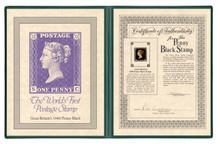
Own the first four stamps ever issued by Great Britain in a single convenient order! This set includes presentation folders for the iconic One Penny Black and Two Penny Blue, with stamps #3 and #4 featuring matching plate positions. And, you’ll save by buying the set!
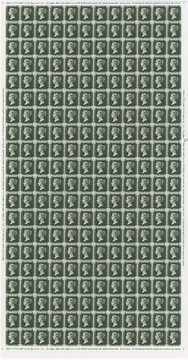
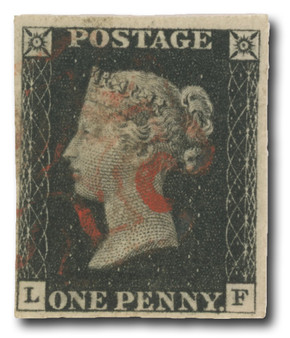
On May 1, 1840, postal history changed forever with the issuance of the world's first adhesive postage stamp – the Penny Black.
Before the Penny Black, sending mail in England was expensive and inefficient. Letters were priced by weight and distance, recipients paid the postage, and they could refuse delivery – leaving the Post Office with mounting losses.
Rowland Hill, an English educator and reformer, proposed a simple but revolutionary solution: a uniform penny rate paid in advance by the sender using an adhesive stamp. The design featured a profile of young Queen Victoria, and when it went on sale in May 1840, it transformed postal service forever.
The results were extraordinary. In just one year, British mail volume more than doubled from 82 million to 169 million pieces. For the first time, every citizen could afford to send a letter.
Penny Blacks were printed with very narrow margins between stamps. When the sheets were cut, many stamps were left without margins on one or more sides. Few Penny Blacks survived with three to four margins intact, making well-preserved examples especially prized by collectors.
The Two Penny Blue was first used on May 8, 1840, just two days after the world’s first postage stamp, the Penny Black. Although the Penny Black is much more famous, the Penny Blue is every bit as historic and desirable – PLUS it’s nearly 10 times scarcer!
Great Britain #3 was printed in a different color than the original One Penny Great Britain stamp to make it easier for postal workers to see if the stamp had been canceled (making it less likely the stamp would be cleaned and reused). This one-penny stamp paid the first class mail rate for 13 years.
Great Britain #4 had the same color as the original two pence stamp but included a white line above the words "TWO PENCE" to distinguish it from the first printing. This stamp is far more scarce than #3 as it paid the double rate and only 90 million were printed (less than 5% of the number of one-penny stamps printed).
Own the first four stamps ever issued by Great Britain in a single convenient order! This set includes presentation folders for the iconic One Penny Black and Two Penny Blue, with stamps #3 and #4 featuring matching plate positions. And, you’ll save by buying the set!
On May 1, 1840, postal history changed forever with the issuance of the world's first adhesive postage stamp – the Penny Black.
Before the Penny Black, sending mail in England was expensive and inefficient. Letters were priced by weight and distance, recipients paid the postage, and they could refuse delivery – leaving the Post Office with mounting losses.
Rowland Hill, an English educator and reformer, proposed a simple but revolutionary solution: a uniform penny rate paid in advance by the sender using an adhesive stamp. The design featured a profile of young Queen Victoria, and when it went on sale in May 1840, it transformed postal service forever.
The results were extraordinary. In just one year, British mail volume more than doubled from 82 million to 169 million pieces. For the first time, every citizen could afford to send a letter.
Penny Blacks were printed with very narrow margins between stamps. When the sheets were cut, many stamps were left without margins on one or more sides. Few Penny Blacks survived with three to four margins intact, making well-preserved examples especially prized by collectors.
The Two Penny Blue was first used on May 8, 1840, just two days after the world’s first postage stamp, the Penny Black. Although the Penny Black is much more famous, the Penny Blue is every bit as historic and desirable – PLUS it’s nearly 10 times scarcer!
Great Britain #3 was printed in a different color than the original One Penny Great Britain stamp to make it easier for postal workers to see if the stamp had been canceled (making it less likely the stamp would be cleaned and reused). This one-penny stamp paid the first class mail rate for 13 years.
Great Britain #4 had the same color as the original two pence stamp but included a white line above the words "TWO PENCE" to distinguish it from the first printing. This stamp is far more scarce than #3 as it paid the double rate and only 90 million were printed (less than 5% of the number of one-penny stamps printed).