

Zoom the image with the mouse
#1046
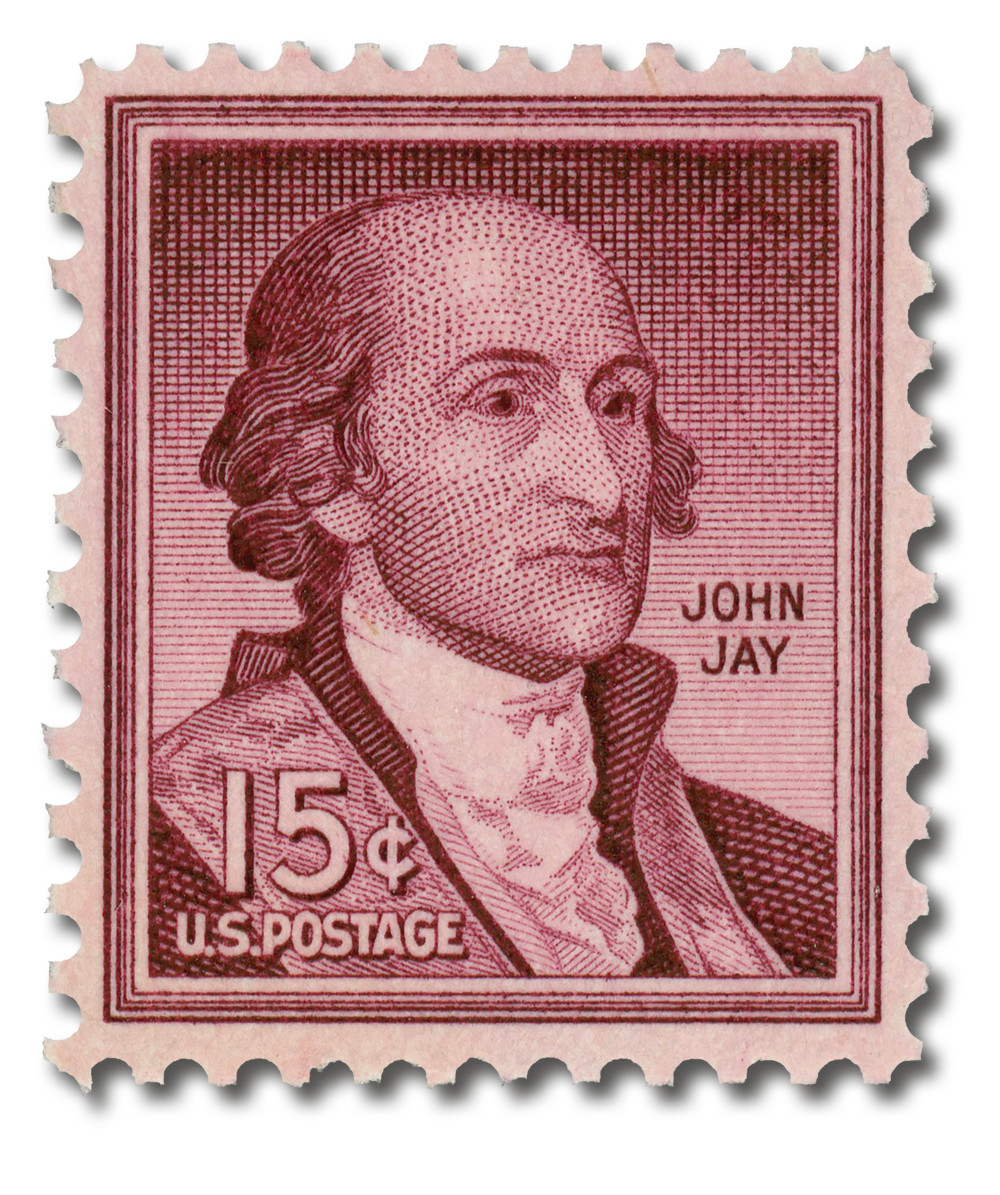
1958 15c Liberty Series: John Jay
$1.20
Share:
U.S. #1046
15¢ John Jay
Liberty Series
Issue Date: December 12, 1958
City: Washington, D.C.
Printed by: Bureau of Engraving and Printing
Printing Method: Rotary Press
Perforations: 11 x 10½
Color: Rose lake
John Jay was born in 1745 in New York City and went on to graduate from King's College, now known as Columbia University. He served as a New York delegate to both the First and Second Continental Congresses, and from December 1778 to September 1779 he served as president of the Continental Congress. He then took on the role of United States minister to Spain, representing American interests abroad during the ongoing fight for independence.
In 1783, Jay played a key role in negotiating the Treaty of Paris, the agreement that formally ended the American Revolution and secured recognition of the United States as an independent nation. He went on to serve as Secretary of Foreign Affairs, helping shape the young country's early diplomatic relationships. In 1789, President George Washington appointed Jay the first chief justice of the United States Supreme Court, a position that placed him at the head of the nation's newly formed judicial branch.
This stamp was issued on December 12, 1958, in Washington, D.C., as part of the Liberty Series, a long running set of definitive stamps honoring notable figures from American history. The portrait used on the stamp draws from a painting of Jay by Gilbert Stuart, the same artist responsible for the well known image of George Washington that appears on numerous other American stamps and currency. At the time of its release, the fifteen cent value paid the airmail rate for letters sent to Europe, later covering the airmail rate to South America as well, giving this tribute to Jay's diplomatic legacy a fittingly international purpose.
U.S. #1046
15¢ John Jay
Liberty Series
Issue Date: December 12, 1958
City: Washington, D.C.
Printed by: Bureau of Engraving and Printing
Printing Method: Rotary Press
Perforations: 11 x 10½
Color: Rose lake
John Jay was born in 1745 in New York City and went on to graduate from King's College, now known as Columbia University. He served as a New York delegate to both the First and Second Continental Congresses, and from December 1778 to September 1779 he served as president of the Continental Congress. He then took on the role of United States minister to Spain, representing American interests abroad during the ongoing fight for independence.
In 1783, Jay played a key role in negotiating the Treaty of Paris, the agreement that formally ended the American Revolution and secured recognition of the United States as an independent nation. He went on to serve as Secretary of Foreign Affairs, helping shape the young country's early diplomatic relationships. In 1789, President George Washington appointed Jay the first chief justice of the United States Supreme Court, a position that placed him at the head of the nation's newly formed judicial branch.
This stamp was issued on December 12, 1958, in Washington, D.C., as part of the Liberty Series, a long running set of definitive stamps honoring notable figures from American history. The portrait used on the stamp draws from a painting of Jay by Gilbert Stuart, the same artist responsible for the well known image of George Washington that appears on numerous other American stamps and currency. At the time of its release, the fifteen cent value paid the airmail rate for letters sent to Europe, later covering the airmail rate to South America as well, giving this tribute to Jay's diplomatic legacy a fittingly international purpose.
Related Items




Most Orders Ship
within 1 Business Day
90 Day Return Policy
Satisfaction Guaranteed
Earn Reward Points
for FREE Stamps & More