

Zoom the image with the mouse
#106
1910 Rhodesia
$7.00
Share:
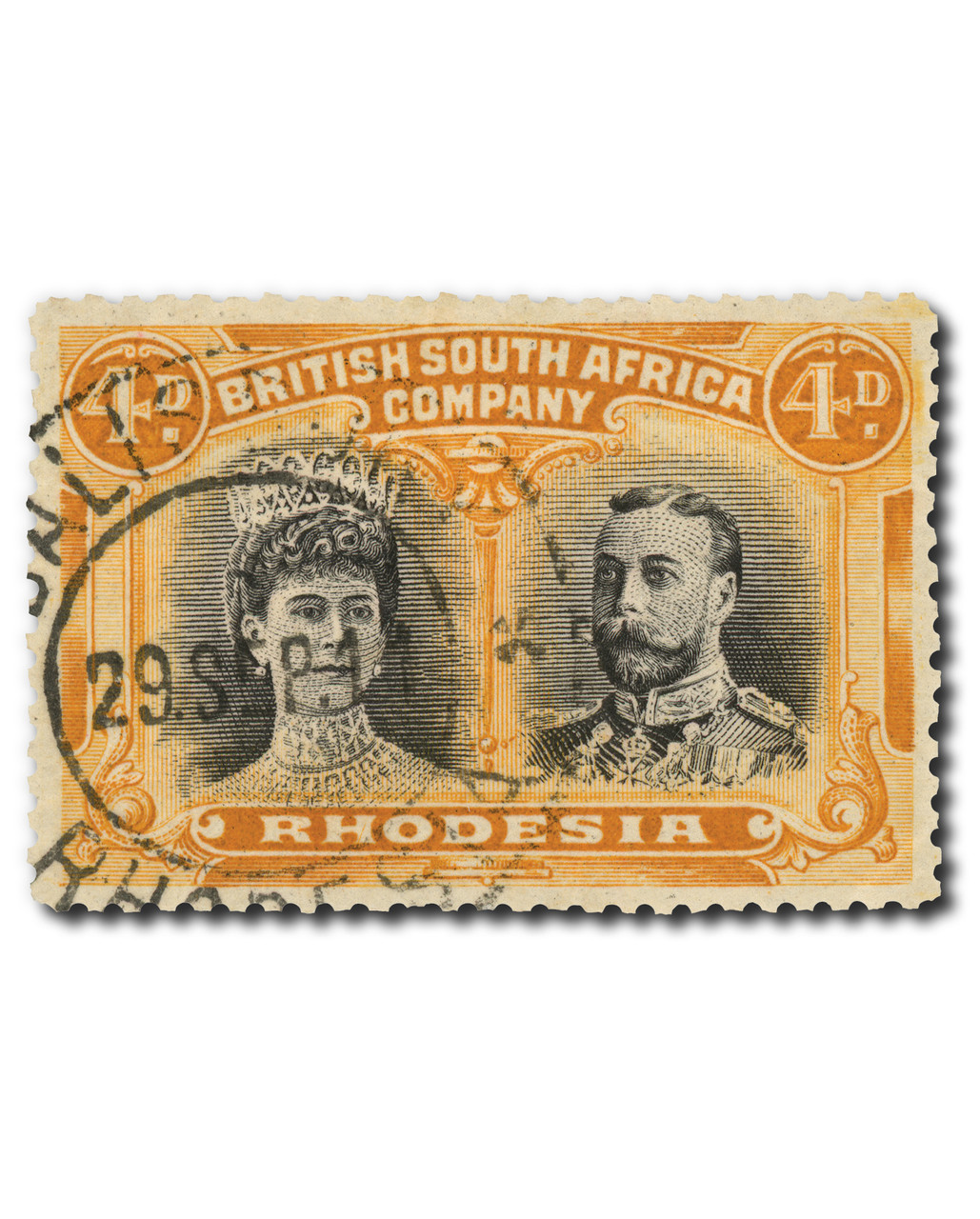
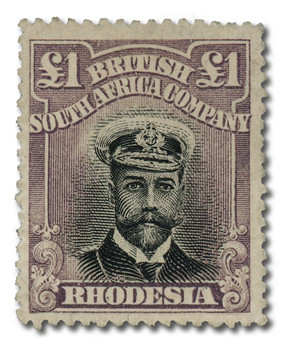
This four pence stamp from Rhodesia was issued in 1910 as part of the famed "Double Heads" series produced by the British South Africa Company. The design features conjoined portraits of King George V and his wife Queen Mary, rendered in fine engraved detail. The stamp is printed in orange and is one of eighteen denominations in this iconic series, which ranged from half-penny to one pound. The inscription reads "British South Africa Company" across the top with "Rhodesia" prominently displayed at the bottom, the first time the territory's name appeared on stamps issued under that name alone.
The Double Heads series was issued on November 11, 1910, originally commissioned to commemorate the visit of the Duke and Duchess of Connaught to Southern Africa. Originally designed to feature King Edward VII, the series was redesigned after his death in 1910 to showcase the new sovereign, King George V, and Queen Mary, symbolizing British imperial authority and the dynasty's continuity. The series became one of the most beautiful and widely collected issues of the British Commonwealth, with many denominations printed in striking bi-color combinations that enhanced their aesthetic appeal. The four pence denomination was a mid-range value covering various postal rates for domestic and foreign correspondence.
The Double Heads remained in circulation from 1910 to 1913, though some denominations continued in use slightly longer. The series is celebrated by collectors for its artistic design, multiple color variations, and numerous printing varieties including perforation differences, paper types, and watermark variations. Among the most notable printing flaws is the "gash in ear" variety, a distinctive mark on Position 2 of the printing plate. The Double Heads were replaced in September 1913 by a new series featuring King George V alone in the uniform of Admiral of the Fleet, but the Double Heads remain regarded as classics of British Commonwealth philately.
This four pence stamp from Rhodesia was issued in 1910 as part of the famed "Double Heads" series produced by the British South Africa Company. The design features conjoined portraits of King George V and his wife Queen Mary, rendered in fine engraved detail. The stamp is printed in orange and is one of eighteen denominations in this iconic series, which ranged from half-penny to one pound. The inscription reads "British South Africa Company" across the top with "Rhodesia" prominently displayed at the bottom, the first time the territory's name appeared on stamps issued under that name alone.
The Double Heads series was issued on November 11, 1910, originally commissioned to commemorate the visit of the Duke and Duchess of Connaught to Southern Africa. Originally designed to feature King Edward VII, the series was redesigned after his death in 1910 to showcase the new sovereign, King George V, and Queen Mary, symbolizing British imperial authority and the dynasty's continuity. The series became one of the most beautiful and widely collected issues of the British Commonwealth, with many denominations printed in striking bi-color combinations that enhanced their aesthetic appeal. The four pence denomination was a mid-range value covering various postal rates for domestic and foreign correspondence.
The Double Heads remained in circulation from 1910 to 1913, though some denominations continued in use slightly longer. The series is celebrated by collectors for its artistic design, multiple color variations, and numerous printing varieties including perforation differences, paper types, and watermark variations. Among the most notable printing flaws is the "gash in ear" variety, a distinctive mark on Position 2 of the printing plate. The Double Heads were replaced in September 1913 by a new series featuring King George V alone in the uniform of Admiral of the Fleet, but the Double Heads remain regarded as classics of British Commonwealth philately.
Related Items


Most Orders Ship
within 1 Business Day
90 Day Return Policy
Satisfaction Guaranteed
Earn Reward Points
for FREE Stamps & More