

Zoom the image with the mouse
#1094//B2
1957-2003 US Flags, Collection of 141 Stamps
$122.50
Share:
Save on Mint U.S. Flag Stamp Collection
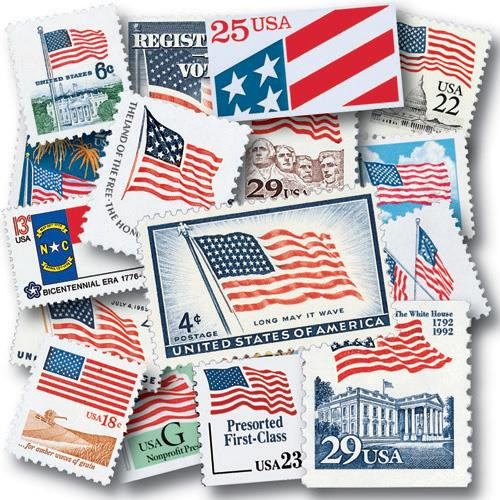
Mystic’s U.S. Flag Collection is a great way to fill lots of spaces in your album. This offer contains 141 stamps issued between 1957 and 2003 – that’s over 45 years! Plus, you’ll SAVE off Mystic's regular retail prices. Take advantage of this wonderful value.
Included in this collection are many of the sought-after flag stamps prized by collectors. You’ll get the 1968 historic flag set of 10, the first plastic stamp (U.S. #2475), the first se-tenant sheet of 50, showcasing the fifty state flags plus the 2000 Stars and Stripes issue, which chronicles the evolution of the American Flag from its inception to our current “Old Glory.”
Here's what you'll get. In mint condition the se-tenants will be attached. In used condition they’ll be single stamps.
B2 2002 34c & 11c Heroes of 2001
1094 1957 4c Old Glory, 48 Stars
1132 1959 4c US Flag, 49 Stars
1249 1964 5c Register and Vote
1338 1968 6c Flag and White House
1338A 1969 6c Flag & White House
1338D 1970 6c Flag and White House
1338F 1971 8c Flag and White House
1338G 1971 8c Flag & White House
1345-54 1968 6c Historic American Flags
1509 1973 10c 50-Star and 13-Star Flags
1597 1978 15c Fort McHenry Flag
1633-82 1976 13c State Flags
1890 18c Flag Over Field
1891 18c Flag over Seacoast
1893 18c Flags/Purple Mts Majesty
1894 20c Flag over Supreme Court
2114 1985 22c Flag Over Capitol Dome
2276 1987 22c Flag Over Fireworks
2278 1988 25c Flag and Clouds
2475 1990 25c Plastic Flag
2523 1991 29c Flag over Mount Rushmore
2593 1992 29c Pledge,
2605 1993 23c Stars & Stripes,
2609 1992 29c Flag over White House
2893 1995 5c Old Glory Non-profit
2897 1995 32c Flag Over Porch
2919 1995 32c Flag Over Field
3153 1997 32c The Stars and Stripes
3278F 1999 33c Flag Over City
3283 1999 33c Flag and Chalkboard
3403 2000 33c The Stars and Stripes
3448 2000 34c Flag Over Farm
3449 2000 34c Flag Over Farm
3450 2000 34c Flag Over Farm
3470 2001 34c Flag Over Farm
3495 2001 34c Flag Over Farm
3508 2001 34c Honoring Veterans
3549 2001 34c United We Stand
3549B 2002 34c United We Stand
3550 2001 34c United We Stand
3550A 2001 34c United We Stand
3620 2002 37c Flag
3621 2002 37c Flag
3622 2002 37c Flag
3623 2002 37c Flag
3624 2002 37c Flag
3625 2002 37c
3629F 2003 37c Flag
3630 2002 37c Flag
3631 2002 37c Flag
3632 2002 37c Flag
3632A 2003 37c Flag
3633 2002 37c Flag
3633A 2003 37c Flag
3634 2002 37c Flag
3635 2002 37c Flag
3636 2002 37c Flag
3637 2003 37c Flag
3776-80 2003 37c Old Glory
First US Flag Stamp
On July 4, 1957, the US Post Office issued its first stamp with the US flag as the central design. It was also the first stamp printed by the Giori press, which allowed the design to be printed in its natural colors in one step.
Previously, the US flag had appeared as a part of the design of several stamps, such as the Eagle and Shield Pictorial, the Francis Scott Key stamp, and 1952 Lafayette issue. In 1957, the US Post Office announced that it would issue a brand new stamp with the flag as the central design and appearing in its natural colors.
Upon hearing the news, some collectors and citizens were outraged. Because the stamps would be canceled, they saw it as disrespectful. They flooded the post office with angry letters citing American legal code that prohibited the reproduction of “the national emblem for disloyal or commercial purposes.” Conversely, many people were also happy about the stamp, praising its beautiful colors and patriotic design. The Post Office stated the stamp was meant to be a reminder of America’s heritage and hard-won liberty.
In spite of the controversy, the stamp was issued as planned on July 4, 1957, in Washington, DC. The stamp was first to reproduce the flag in its natural colors in one operation. This was thanks to the new Giori Press the Post Office acquired in 1955. Designed by Gualtiero Giori, it was dubbed the “Giori Press,” and the new machine could produce stamps in two or three different colors, all in one pass. Different rollers each applied a different color. It would be used to print many multicolored stamps throughout the 1960s and 70s.
Exactly two years after this stamp was issued, the Post Office issued another flag stamp, #1132. The new stamp featured a flag with 49 stars, to mark the day the 49-star flag went into use. That was a rule dating back to 1818 that declared stars representing new states added to the Union would be added to the flag on the first July 4 after the state joined the Union. This stamp was issued in Auburn, New York, home of William H. Seward, who had arranged the purchase of Alaska (the 49th state whose star was added in 1959).
Yet another year later, the US flag was again the central focus of a new stamp issued on Independence Day. This stamp, #1153, pictured the new 50-star flag and was issued in Honolulu, Hawaii, America’s 50th state. This stamp would be the first of many to picture the 50-star US flag. In fact, despite the objections of some in 1957, the US flag has become one of the most popular US stamp subjects, with new stamps being issued nearly every year.
Save on Mint U.S. Flag Stamp Collection
Mystic’s U.S. Flag Collection is a great way to fill lots of spaces in your album. This offer contains 141 stamps issued between 1957 and 2003 – that’s over 45 years! Plus, you’ll SAVE off Mystic's regular retail prices. Take advantage of this wonderful value.
Included in this collection are many of the sought-after flag stamps prized by collectors. You’ll get the 1968 historic flag set of 10, the first plastic stamp (U.S. #2475), the first se-tenant sheet of 50, showcasing the fifty state flags plus the 2000 Stars and Stripes issue, which chronicles the evolution of the American Flag from its inception to our current “Old Glory.”
Here's what you'll get. In mint condition the se-tenants will be attached. In used condition they’ll be single stamps.
B2 2002 34c & 11c Heroes of 2001
1094 1957 4c Old Glory, 48 Stars
1132 1959 4c US Flag, 49 Stars
1249 1964 5c Register and Vote
1338 1968 6c Flag and White House
1338A 1969 6c Flag & White House
1338D 1970 6c Flag and White House
1338F 1971 8c Flag and White House
1338G 1971 8c Flag & White House
1345-54 1968 6c Historic American Flags
1509 1973 10c 50-Star and 13-Star Flags
1597 1978 15c Fort McHenry Flag
1633-82 1976 13c State Flags
1890 18c Flag Over Field
1891 18c Flag over Seacoast
1893 18c Flags/Purple Mts Majesty
1894 20c Flag over Supreme Court
2114 1985 22c Flag Over Capitol Dome
2276 1987 22c Flag Over Fireworks
2278 1988 25c Flag and Clouds
2475 1990 25c Plastic Flag
2523 1991 29c Flag over Mount Rushmore
2593 1992 29c Pledge,
2605 1993 23c Stars & Stripes,
2609 1992 29c Flag over White House
2893 1995 5c Old Glory Non-profit
2897 1995 32c Flag Over Porch
2919 1995 32c Flag Over Field
3153 1997 32c The Stars and Stripes
3278F 1999 33c Flag Over City
3283 1999 33c Flag and Chalkboard
3403 2000 33c The Stars and Stripes
3448 2000 34c Flag Over Farm
3449 2000 34c Flag Over Farm
3450 2000 34c Flag Over Farm
3470 2001 34c Flag Over Farm
3495 2001 34c Flag Over Farm
3508 2001 34c Honoring Veterans
3549 2001 34c United We Stand
3549B 2002 34c United We Stand
3550 2001 34c United We Stand
3550A 2001 34c United We Stand
3620 2002 37c Flag
3621 2002 37c Flag
3622 2002 37c Flag
3623 2002 37c Flag
3624 2002 37c Flag
3625 2002 37c
3629F 2003 37c Flag
3630 2002 37c Flag
3631 2002 37c Flag
3632 2002 37c Flag
3632A 2003 37c Flag
3633 2002 37c Flag
3633A 2003 37c Flag
3634 2002 37c Flag
3635 2002 37c Flag
3636 2002 37c Flag
3637 2003 37c Flag
3776-80 2003 37c Old Glory
First US Flag Stamp
On July 4, 1957, the US Post Office issued its first stamp with the US flag as the central design. It was also the first stamp printed by the Giori press, which allowed the design to be printed in its natural colors in one step.
Previously, the US flag had appeared as a part of the design of several stamps, such as the Eagle and Shield Pictorial, the Francis Scott Key stamp, and 1952 Lafayette issue. In 1957, the US Post Office announced that it would issue a brand new stamp with the flag as the central design and appearing in its natural colors.
Upon hearing the news, some collectors and citizens were outraged. Because the stamps would be canceled, they saw it as disrespectful. They flooded the post office with angry letters citing American legal code that prohibited the reproduction of “the national emblem for disloyal or commercial purposes.” Conversely, many people were also happy about the stamp, praising its beautiful colors and patriotic design. The Post Office stated the stamp was meant to be a reminder of America’s heritage and hard-won liberty.
In spite of the controversy, the stamp was issued as planned on July 4, 1957, in Washington, DC. The stamp was first to reproduce the flag in its natural colors in one operation. This was thanks to the new Giori Press the Post Office acquired in 1955. Designed by Gualtiero Giori, it was dubbed the “Giori Press,” and the new machine could produce stamps in two or three different colors, all in one pass. Different rollers each applied a different color. It would be used to print many multicolored stamps throughout the 1960s and 70s.
Exactly two years after this stamp was issued, the Post Office issued another flag stamp, #1132. The new stamp featured a flag with 49 stars, to mark the day the 49-star flag went into use. That was a rule dating back to 1818 that declared stars representing new states added to the Union would be added to the flag on the first July 4 after the state joined the Union. This stamp was issued in Auburn, New York, home of William H. Seward, who had arranged the purchase of Alaska (the 49th state whose star was added in 1959).
Yet another year later, the US flag was again the central focus of a new stamp issued on Independence Day. This stamp, #1153, pictured the new 50-star flag and was issued in Honolulu, Hawaii, America’s 50th state. This stamp would be the first of many to picture the 50-star US flag. In fact, despite the objections of some in 1957, the US flag has become one of the most popular US stamp subjects, with new stamps being issued nearly every year.
Related Items

Save Up To 19%



Save Up To 11%


Most Orders Ship
within 1 Business Day
90 Day Return Policy
Satisfaction Guaranteed
Earn Reward Points
for FREE Stamps & More