
Save Up To 6%

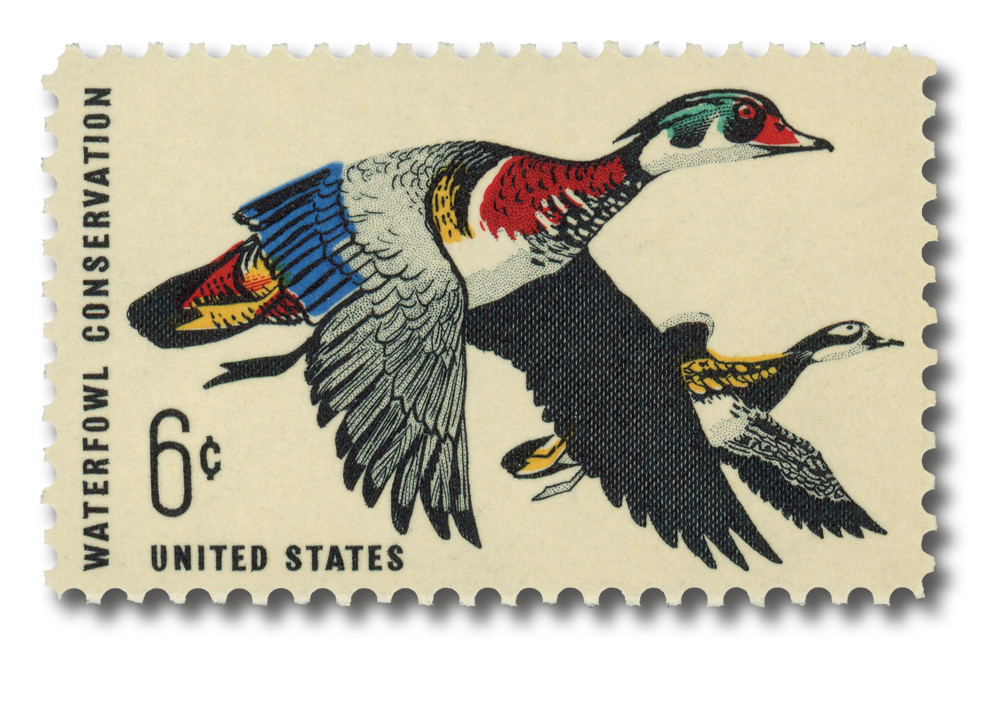
U.S. #1362
1968 6¢ Waterfowl Conservation
Issue Date: October 24, 1968
City: Cleveland, OH
Quantity: 142,245,000
Printed By: Bureau of Engraving and Printing
Printing Method: Lithographed, engraved
Perforations: 11
Color: Black and multicolored
This is the Waterfowl Conservation stamp, Scott 1362, issued September 5, 1968, a single 6-cent stamp featuring two wood ducks in flight.
The artwork is striking for a stamp of its era. The dominant bird is a male wood duck shown in full wing-spread, and the illustrator made good use of the vertical format to capture the sense of motion. The male wood duck is one of the most colorful waterfowl in North America, with iridescent green and chestnut plumage, and the stamp does a nice job rendering that without looking garish. A smaller duck, likely a female, follows behind in the upper right, giving the composition a natural, in-flight feel.
The timing of this stamp is interesting from a conservation standpoint. The wood duck had come remarkably close to extinction in the early 20th century due to overhunting and habitat loss. By the time this stamp was issued, decades of conservation efforts including nest box programs and hunting regulations had brought the population back substantially. So the choice of the wood duck for a waterfowl conservation stamp was pointed, a species that had actually been saved through deliberate human effort.
The stamp was issued the same year the North American Waterfowl Management Plan was gaining momentum, and just a few years after the federal Duck Stamp program had been running long enough to show real results in habitat preservation.
U.S. #1362
1968 6¢ Waterfowl Conservation
Issue Date: October 24, 1968
City: Cleveland, OH
Quantity: 142,245,000
Printed By: Bureau of Engraving and Printing
Printing Method: Lithographed, engraved
Perforations: 11
Color: Black and multicolored
This is the Waterfowl Conservation stamp, Scott 1362, issued September 5, 1968, a single 6-cent stamp featuring two wood ducks in flight.
The artwork is striking for a stamp of its era. The dominant bird is a male wood duck shown in full wing-spread, and the illustrator made good use of the vertical format to capture the sense of motion. The male wood duck is one of the most colorful waterfowl in North America, with iridescent green and chestnut plumage, and the stamp does a nice job rendering that without looking garish. A smaller duck, likely a female, follows behind in the upper right, giving the composition a natural, in-flight feel.
The timing of this stamp is interesting from a conservation standpoint. The wood duck had come remarkably close to extinction in the early 20th century due to overhunting and habitat loss. By the time this stamp was issued, decades of conservation efforts including nest box programs and hunting regulations had brought the population back substantially. So the choice of the wood duck for a waterfowl conservation stamp was pointed, a species that had actually been saved through deliberate human effort.
The stamp was issued the same year the North American Waterfowl Management Plan was gaining momentum, and just a few years after the federal Duck Stamp program had been running long enough to show real results in habitat preservation.


