


Zoom the image with the mouse
#14
1859 Canada
$85.00
Share:
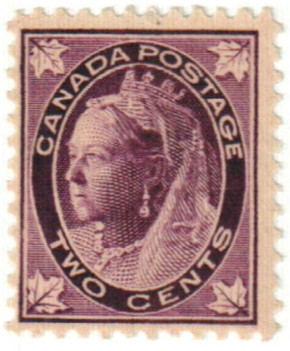
Canada Scott 14 is the one-cent Queen Victoria stamp issued in 1859, and it marks a turning point in Canadian postal history. This was part of the first series of Canadian stamps printed in decimal currency, a major change from the earlier pence system that reflected Canada's move toward a more modern economy. The portrait of Queen Victoria is beautifully engraved, showing a young queen in profile with an elaborate hairstyle, all set inside an oval frame surrounded by a fine crosshatch background that gives the stamp its rich, detailed texture. The rose pink color is warm and distinctive, and the perforations tell you right away that you're looking at a more modern stamp than the imperforate Beaver issue that came just a few years before it.
What makes this stamp interesting beyond its appearance is the story of the era it comes from. In 1859 Canada was still eight years away from becoming a fully independent confederation, but the country was already making decisions that looked toward the future. Switching from pence to cents was one of those decisions, aligning Canada more closely with its American neighbors and setting the stage for the Dominion of Canada that would be established in 1867. Queen Victoria had been on the British throne for more than twenty years by this point and would reign for another four decades, making her one of the most familiar faces in the world.
Canada Scott 14 is the one-cent Queen Victoria stamp issued in 1859, and it marks a turning point in Canadian postal history. This was part of the first series of Canadian stamps printed in decimal currency, a major change from the earlier pence system that reflected Canada's move toward a more modern economy. The portrait of Queen Victoria is beautifully engraved, showing a young queen in profile with an elaborate hairstyle, all set inside an oval frame surrounded by a fine crosshatch background that gives the stamp its rich, detailed texture. The rose pink color is warm and distinctive, and the perforations tell you right away that you're looking at a more modern stamp than the imperforate Beaver issue that came just a few years before it.
What makes this stamp interesting beyond its appearance is the story of the era it comes from. In 1859 Canada was still eight years away from becoming a fully independent confederation, but the country was already making decisions that looked toward the future. Switching from pence to cents was one of those decisions, aligning Canada more closely with its American neighbors and setting the stage for the Dominion of Canada that would be established in 1867. Queen Victoria had been on the British throne for more than twenty years by this point and would reign for another four decades, making her one of the most familiar faces in the world.
Related Items




Most Orders Ship
within 1 Business Day
90 Day Return Policy
Satisfaction Guaranteed
Earn Reward Points
for FREE Stamps & More