


Zoom the image with the mouse
#151-54
1911-12 Great Britain, King George V
$15.50
Share:
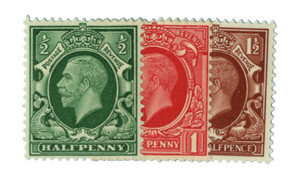
The first stamps of King George V's reign were issued on his Coronation Day, June 22, 1911, featuring a three quarter profile portrait derived from a 1910 photograph taken by the royal court photographers W. and D. Downey. Because of this connection to the Downey photograph, collectors came to know these early definitives as the Downey Head issues. Only the halfpenny and penny values were ready in time for the coronation, though officials had originally intended to release the complete set of denominations on that date.
The stamps were printed by Harrison and Sons Ltd using plates produced by the Royal Mint, and neither firm had any previous experience producing postage stamps. Rushed to meet the coronation deadline, the resulting stamps drew considerable criticism for their poor print quality, particularly the shading used in the King's portrait. Engravers made two subsequent attempts to improve the design, producing what collectors refer to as Die 2 issues, before officials ultimately decided to abandon the three quarter profile altogether in favor of an entirely new design.
The replacement design, introduced in 1912, featured a true left facing profile of the King adapted from coinage and medal work by sculptor Bertram Mackennal, which became the King's enduring image on British stamps for the remainder of his reign. As a result, the halfpenny and penny Downey Head stamps issued between June 1911 and October 1912 remain the only denominations ever produced using that original three quarter profile design, making this short lived series a distinctive chapter in the early stamps of King George V's reign.
The first stamps of King George V's reign were issued on his Coronation Day, June 22, 1911, featuring a three quarter profile portrait derived from a 1910 photograph taken by the royal court photographers W. and D. Downey. Because of this connection to the Downey photograph, collectors came to know these early definitives as the Downey Head issues. Only the halfpenny and penny values were ready in time for the coronation, though officials had originally intended to release the complete set of denominations on that date.
The stamps were printed by Harrison and Sons Ltd using plates produced by the Royal Mint, and neither firm had any previous experience producing postage stamps. Rushed to meet the coronation deadline, the resulting stamps drew considerable criticism for their poor print quality, particularly the shading used in the King's portrait. Engravers made two subsequent attempts to improve the design, producing what collectors refer to as Die 2 issues, before officials ultimately decided to abandon the three quarter profile altogether in favor of an entirely new design.
The replacement design, introduced in 1912, featured a true left facing profile of the King adapted from coinage and medal work by sculptor Bertram Mackennal, which became the King's enduring image on British stamps for the remainder of his reign. As a result, the halfpenny and penny Downey Head stamps issued between June 1911 and October 1912 remain the only denominations ever produced using that original three quarter profile design, making this short lived series a distinctive chapter in the early stamps of King George V's reign.
Related Items





Most Orders Ship
within 1 Business Day
90 Day Return Policy
Satisfaction Guaranteed
Earn Reward Points
for FREE Stamps & More