

Zoom the image with the mouse
#159-72
1912-13 Great Britain, King George V
$88.00
Share:
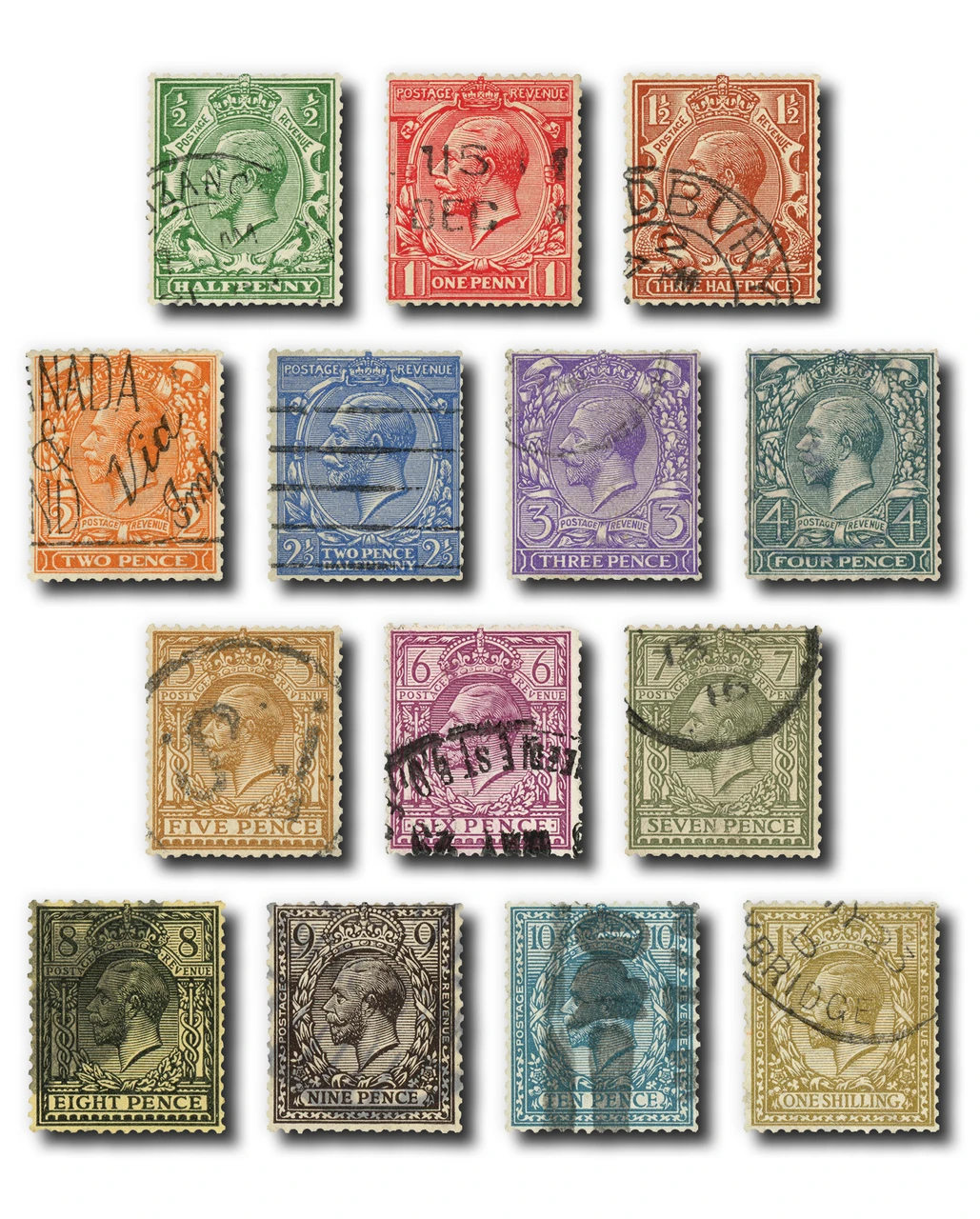
Following the disappointing reception of the Downey Head stamps, King George V decided that his portrait needed to be replaced entirely, suggesting a true side profile rather than the three quarter angle used in the earlier issue. The new profile was based on effigies created by sculptor Bertram Mackennal for the King's coinage and medals, and was inserted into existing stamp frames by Mackennal and fellow designer George Eve, replacing the Downey Head series during the second half of 1912. Mackennal had first come to the King's attention two years earlier, when he sat for the sculptor while Mackennal worked on the royal effigy for new coins and medals, an encounter that grew into a lasting friendship between the two men.
Mackennal's coinage based profile served as the foundation for the halfpenny, three halfpence, two pence, three pence, and four pence values, while a larger medal style head appeared on the penny and two and a half penny stamps, and an intermediate version was used for the five pence through one shilling denominations. Mackennal designed the frames for the lower denominations from halfpenny through four pence, while Eve contributed a pillar design for the five pence through eight pence values and a wreath design for the nine pence through one shilling stamps. This careful matching of portrait size and frame style across fourteen different denominations gave the series a cohesive appearance despite its many individual values.
The lower denominations in this series were printed using the letterpress method from plates produced by the Royal Mint, remaining in production until 1924, when Waterlow and Sons took over printing duties from Harrison and Sons. This Mackennal profile became the King's enduring image on ordinary British postage for the remainder of the decade, standing in sharp contrast to the troubled Downey Head issue it replaced. The series remained in wide circulation for years, serving as the everyday face of British mail throughout much of King George V's reign before giving way to newer printing techniques in the 1930s.
Following the disappointing reception of the Downey Head stamps, King George V decided that his portrait needed to be replaced entirely, suggesting a true side profile rather than the three quarter angle used in the earlier issue. The new profile was based on effigies created by sculptor Bertram Mackennal for the King's coinage and medals, and was inserted into existing stamp frames by Mackennal and fellow designer George Eve, replacing the Downey Head series during the second half of 1912. Mackennal had first come to the King's attention two years earlier, when he sat for the sculptor while Mackennal worked on the royal effigy for new coins and medals, an encounter that grew into a lasting friendship between the two men.
Mackennal's coinage based profile served as the foundation for the halfpenny, three halfpence, two pence, three pence, and four pence values, while a larger medal style head appeared on the penny and two and a half penny stamps, and an intermediate version was used for the five pence through one shilling denominations. Mackennal designed the frames for the lower denominations from halfpenny through four pence, while Eve contributed a pillar design for the five pence through eight pence values and a wreath design for the nine pence through one shilling stamps. This careful matching of portrait size and frame style across fourteen different denominations gave the series a cohesive appearance despite its many individual values.
The lower denominations in this series were printed using the letterpress method from plates produced by the Royal Mint, remaining in production until 1924, when Waterlow and Sons took over printing duties from Harrison and Sons. This Mackennal profile became the King's enduring image on ordinary British postage for the remainder of the decade, standing in sharp contrast to the troubled Downey Head issue it replaced. The series remained in wide circulation for years, serving as the everyday face of British mail throughout much of King George V's reign before giving way to newer printing techniques in the 1930s.
Related Items





Most Orders Ship
within 1 Business Day
90 Day Return Policy
Satisfaction Guaranteed
Earn Reward Points
for FREE Stamps & More