

Zoom the image with the mouse
#160a
1912 Great Britain, King George V
$110.00
Share:
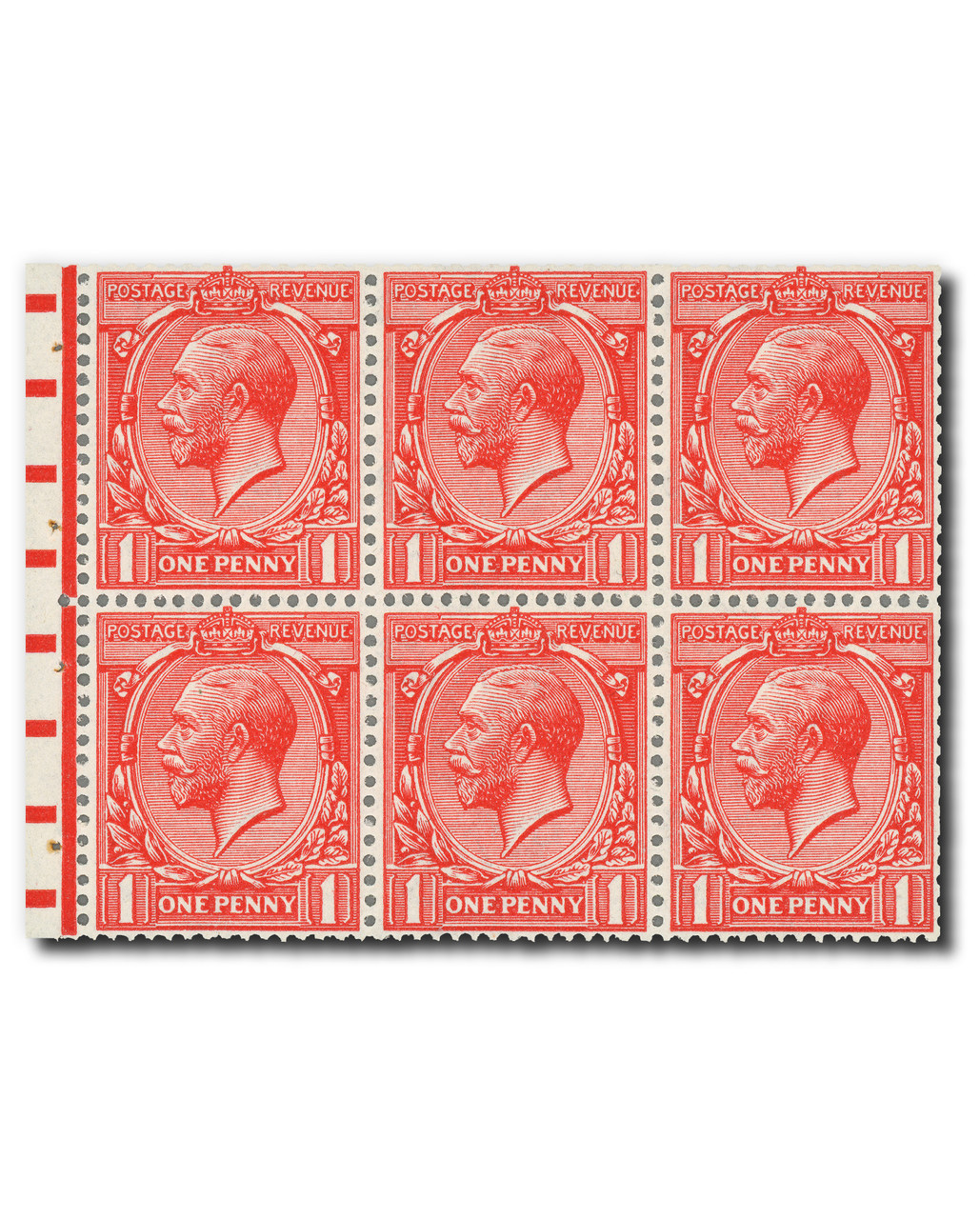
Following the disappointing reception of the Downey Head stamps, King George V decided that his portrait needed to be replaced entirely, suggesting a true side profile rather than the three quarter angle used in the earlier issue. The new profile was based on effigies created by sculptor Bertram Mackennal for the King's coinage and medals, and was inserted into existing stamp frames by Mackennal and fellow designer George Eve, replacing the Downey Head series during the second half of 1912. This block of six shows the one penny value, using the larger medal style head Mackennal reserved for that denomination along with the two and a half penny stamp.
The penny rate covered the standard cost of mailing an ordinary letter within Great Britain, making this denomination by far the most heavily used stamp in the series, printed and consumed in vast quantities to keep pace with the country's everyday postal demands. This block was issued in booklet form, identifiable by the red guide markings running along its left edge, a printing feature used to help postal clerks and printers align the sheets accurately during production. Booklet panes like this one were sold to the public in small books for convenient everyday use, differing from the larger sheets distributed through post offices for bulk purchase.
This Mackennal profile became the King's enduring image on ordinary British postage for the remainder of the decade, remaining in production until 1924, when Waterlow and Sons took over printing duties from Harrison and Sons. As the standard letter rate stamp of its era, the penny value saw more daily use across Great Britain than any other denomination in the series, making surviving blocks and booklet panes like this one a popular way for collectors to study the printing and distribution methods used during King George V's reign.
Following the disappointing reception of the Downey Head stamps, King George V decided that his portrait needed to be replaced entirely, suggesting a true side profile rather than the three quarter angle used in the earlier issue. The new profile was based on effigies created by sculptor Bertram Mackennal for the King's coinage and medals, and was inserted into existing stamp frames by Mackennal and fellow designer George Eve, replacing the Downey Head series during the second half of 1912. This block of six shows the one penny value, using the larger medal style head Mackennal reserved for that denomination along with the two and a half penny stamp.
The penny rate covered the standard cost of mailing an ordinary letter within Great Britain, making this denomination by far the most heavily used stamp in the series, printed and consumed in vast quantities to keep pace with the country's everyday postal demands. This block was issued in booklet form, identifiable by the red guide markings running along its left edge, a printing feature used to help postal clerks and printers align the sheets accurately during production. Booklet panes like this one were sold to the public in small books for convenient everyday use, differing from the larger sheets distributed through post offices for bulk purchase.
This Mackennal profile became the King's enduring image on ordinary British postage for the remainder of the decade, remaining in production until 1924, when Waterlow and Sons took over printing duties from Harrison and Sons. As the standard letter rate stamp of its era, the penny value saw more daily use across Great Britain than any other denomination in the series, making surviving blocks and booklet panes like this one a popular way for collectors to study the printing and distribution methods used during King George V's reign.
Related Items

Save Up To 19%



Save Up To 11%


Most Orders Ship
within 1 Business Day
90 Day Return Policy
Satisfaction Guaranteed
Earn Reward Points
for FREE Stamps & More