
Save Up To 5%

U.S. #1750
1978 13¢ Theater
American Dance Issue
Issue Date: April 26, 1978
City: New York, NY
Quantity: 39,399,600
Printed By: Bureau of Engraving and Printing
Printing Method: Photogravure
Perforations: 11
Color: Multicolored
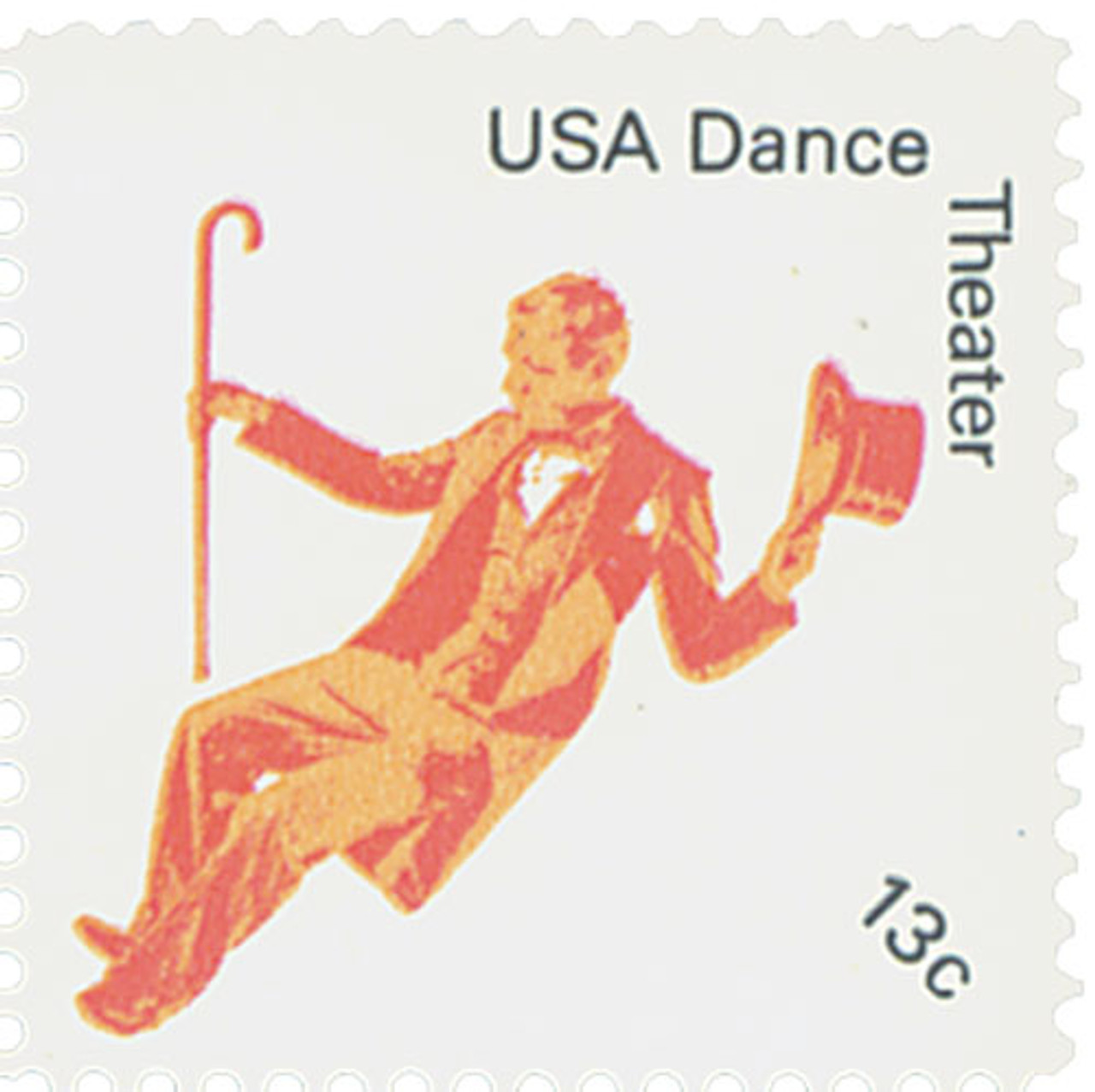
Issued on April 26, 1978, in New York City, this 13-cent stamp is the Theater Dance value from a block of four stamps honoring the contribution of dance to American society. Designed by John Hill and printed by the Bureau of Engraving and Printing using the photogravure method, the block represents four distinct dance traditions — ballet, folk, modern, and theater. The Theater stamp's image of a top-hatted performer mid-stride, cane in one hand and hat in the other, captures the energy and showmanship that defined American stage entertainment from vaudeville through Broadway.
Theater dance in America grew out of the variety shows and minstrel performances of the 19th century and evolved through vaudeville into the fully integrated song-and-dance productions of the Broadway stage. By the time this stamp was issued, American musical theater had been recognized worldwide as a distinctive and influential art form, with choreographers like Jerome Robbins and Bob Fosse having reshaped what dance on stage could look like. The figure on the stamp evokes the older tradition of the song-and-dance man — a performer equally comfortable with comedy, acrobatics, and theatrical timing.
U.S. #1750
1978 13¢ Theater
American Dance Issue
Issue Date: April 26, 1978
City: New York, NY
Quantity: 39,399,600
Printed By: Bureau of Engraving and Printing
Printing Method: Photogravure
Perforations: 11
Color: Multicolored
Issued on April 26, 1978, in New York City, this 13-cent stamp is the Theater Dance value from a block of four stamps honoring the contribution of dance to American society. Designed by John Hill and printed by the Bureau of Engraving and Printing using the photogravure method, the block represents four distinct dance traditions — ballet, folk, modern, and theater. The Theater stamp's image of a top-hatted performer mid-stride, cane in one hand and hat in the other, captures the energy and showmanship that defined American stage entertainment from vaudeville through Broadway.
Theater dance in America grew out of the variety shows and minstrel performances of the 19th century and evolved through vaudeville into the fully integrated song-and-dance productions of the Broadway stage. By the time this stamp was issued, American musical theater had been recognized worldwide as a distinctive and influential art form, with choreographers like Jerome Robbins and Bob Fosse having reshaped what dance on stage could look like. The figure on the stamp evokes the older tradition of the song-and-dance man — a performer equally comfortable with comedy, acrobatics, and theatrical timing.


