

Zoom the image with the mouse
#1921-24
1981 18c Preservation of Wildlife Habitat
$3.50
Share:
U.S. #1921-24
1981 18¢ Preservation of Wildlife Habitat
Issue Date: June 26, 1981
City: Reno, NV
Quantity: 44,732,500
Printed By: Bureau of Engraving and Printing
Printing Method: Photogravure
Perforations: 11
Color: Multicolored
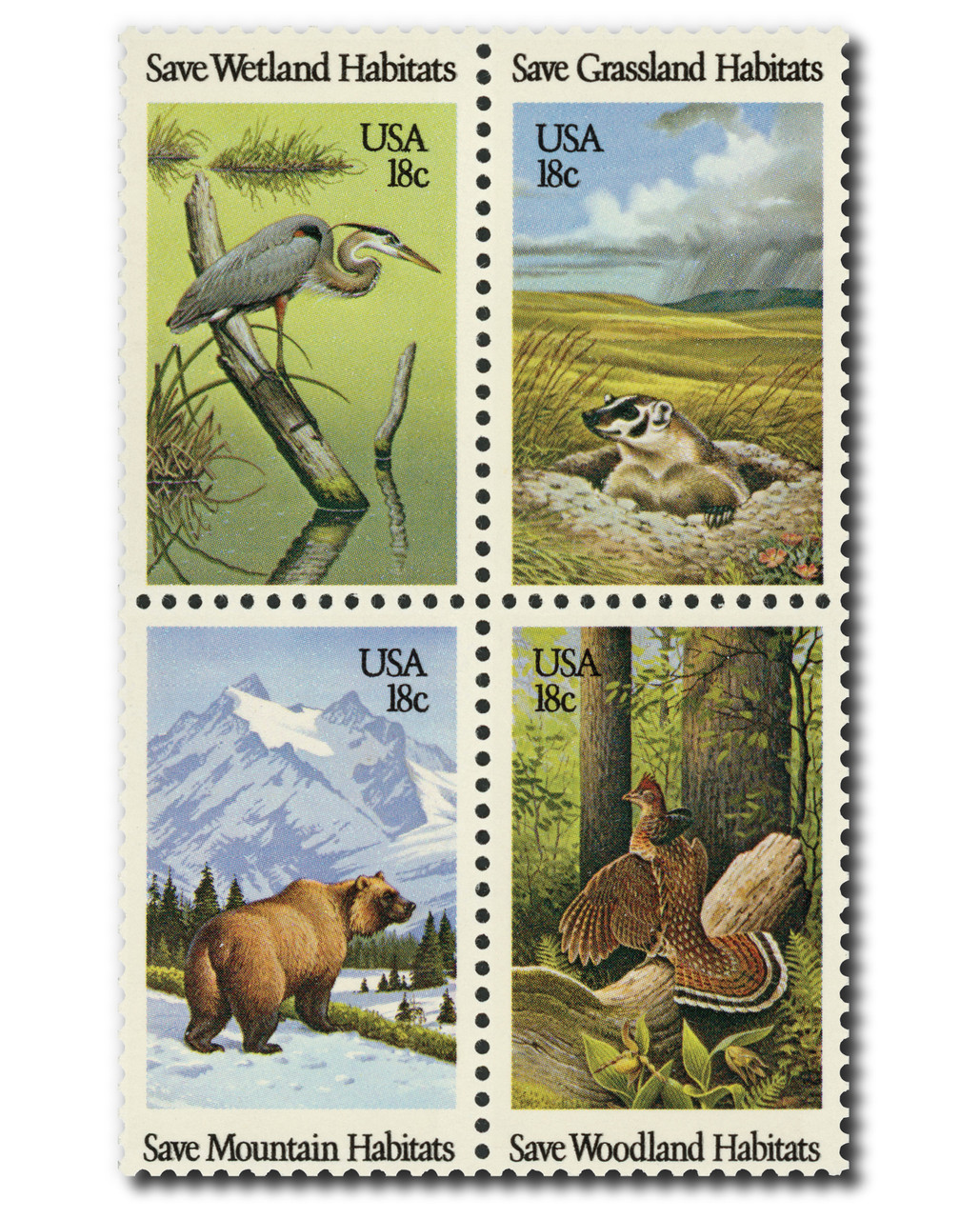
These Wildlife Habitats stamps issued June 26, 1981, as a block of four 18-cent stamps that the Postal Service released as a set meant to be collected together. Each stamp pairs an American animal with the habitat it depends on, and the artwork is genuinely eye-catching - painted in a naturalistic style that was popular for wildlife subjects in that era.
The wetlands stamp shows a great blue heron perched on a weathered snag above still water, with reeds and pine boughs framing the scene. The grasslands stamp features an American badger emerging from its burrow in a golden prairie landscape with a stormy sky behind it. The mountain habitats stamp has a grizzly bear standing in a snowy alpine setting with glaciated peaks in the background. The woodland habitats stamp depicts a ruffed grouse displaying on a mossy log on the forest floor, which is one of the more unusual and charming compositions in the set.
The block was issued at a moment when environmental awareness was very much part of the national conversation. The Endangered Species Act had been in place since 1973, and the idea that specific habitats needed protection, not just individual animals, was gaining ground with the public. The Postal Service was fairly active in that period about using stamps to highlight conservation themes.
U.S. #1921-24
1981 18¢ Preservation of Wildlife Habitat
Issue Date: June 26, 1981
City: Reno, NV
Quantity: 44,732,500
Printed By: Bureau of Engraving and Printing
Printing Method: Photogravure
Perforations: 11
Color: Multicolored
These Wildlife Habitats stamps issued June 26, 1981, as a block of four 18-cent stamps that the Postal Service released as a set meant to be collected together. Each stamp pairs an American animal with the habitat it depends on, and the artwork is genuinely eye-catching - painted in a naturalistic style that was popular for wildlife subjects in that era.
The wetlands stamp shows a great blue heron perched on a weathered snag above still water, with reeds and pine boughs framing the scene. The grasslands stamp features an American badger emerging from its burrow in a golden prairie landscape with a stormy sky behind it. The mountain habitats stamp has a grizzly bear standing in a snowy alpine setting with glaciated peaks in the background. The woodland habitats stamp depicts a ruffed grouse displaying on a mossy log on the forest floor, which is one of the more unusual and charming compositions in the set.
The block was issued at a moment when environmental awareness was very much part of the national conversation. The Endangered Species Act had been in place since 1973, and the idea that specific habitats needed protection, not just individual animals, was gaining ground with the public. The Postal Service was fairly active in that period about using stamps to highlight conservation themes.
Related Items

Save Up To 6%


Save Up To 6%


Most Orders Ship
within 1 Business Day
90 Day Return Policy
Satisfaction Guaranteed
Earn Reward Points
for FREE Stamps & More