


Zoom the image with the mouse
#226-29
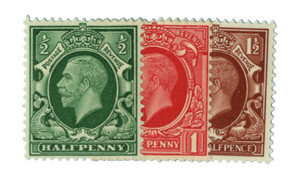
1935 Great Britain, King George V Silver Jubilee Issue
$0.00
Share:
On May 6, 1935, King George V marked twenty five years on the throne as King of the United Kingdom, the British Dominions, and Emperor of India, an occasion celebrated with large scale public events throughout London and across the country. It stood as the first Silver Jubilee ever celebrated by a reigning British monarch, and celebrations in London opened with a carriage procession through the city to St Paul's Cathedral for a national service of thanksgiving. To mark the occasion, the British Colonial Office proposed an empire wide commemorative stamp issue, and although the King, himself a devoted stamp collector, generally held little enthusiasm for commemorative stamps, he gave his approval for the project.
The Post Office settled on four denominations for the set, the halfpenny, penny, three halfpence, and two and a half pence, each featuring an identical design paired with a different color for every value. Officials introduced the photogravure printing process for this issue, praising the richness of color and depth of tone the new method allowed compared to earlier stamp production techniques. The Postmaster General noted that the King's Jubilee date also happened to fall near the 95th anniversary of the world's first adhesive postage stamp, framing the new issue as a striking advance in the art of stamp production compared to that earlier milestone.
This Silver Jubilee set became the very first British Omnibus issue, a term describing a common design released simultaneously across Britain and its colonies and dominions, with more than fifty territories eventually producing their own versions of the design. Among the various printings, a small batch of the two and a half pence value was mistakenly issued in Prussian blue rather than its intended color, an error that became one of the most celebrated color varieties in British philately, sometimes referred to as the King's error. Coming just months before George V's death in January 1936, the Silver Jubilee issue remains a fitting tribute to a king remembered as much for his passion for stamp collecting as for his twenty five years on the throne.
On May 6, 1935, King George V marked twenty five years on the throne as King of the United Kingdom, the British Dominions, and Emperor of India, an occasion celebrated with large scale public events throughout London and across the country. It stood as the first Silver Jubilee ever celebrated by a reigning British monarch, and celebrations in London opened with a carriage procession through the city to St Paul's Cathedral for a national service of thanksgiving. To mark the occasion, the British Colonial Office proposed an empire wide commemorative stamp issue, and although the King, himself a devoted stamp collector, generally held little enthusiasm for commemorative stamps, he gave his approval for the project.
The Post Office settled on four denominations for the set, the halfpenny, penny, three halfpence, and two and a half pence, each featuring an identical design paired with a different color for every value. Officials introduced the photogravure printing process for this issue, praising the richness of color and depth of tone the new method allowed compared to earlier stamp production techniques. The Postmaster General noted that the King's Jubilee date also happened to fall near the 95th anniversary of the world's first adhesive postage stamp, framing the new issue as a striking advance in the art of stamp production compared to that earlier milestone.
This Silver Jubilee set became the very first British Omnibus issue, a term describing a common design released simultaneously across Britain and its colonies and dominions, with more than fifty territories eventually producing their own versions of the design. Among the various printings, a small batch of the two and a half pence value was mistakenly issued in Prussian blue rather than its intended color, an error that became one of the most celebrated color varieties in British philately, sometimes referred to as the King's error. Coming just months before George V's death in January 1936, the Silver Jubilee issue remains a fitting tribute to a king remembered as much for his passion for stamp collecting as for his twenty five years on the throne.
Related Items




Most Orders Ship
within 1 Business Day
90 Day Return Policy
Satisfaction Guaranteed
Earn Reward Points
for FREE Stamps & More