


Zoom the image with the mouse
#233a
1893 4c Fleet of Columbus, Blue, Color Error, with Free Album Page, Mount, and used #233
$12,500.00
Share:
The 4-cent blue color error of the 1893 Columbian Exposition issue (Scott #233a) is one of the most celebrated errors in all of U.S. philately. The normal 4-cent Columbian (Scott #233) was printed in ultramarine, a color distinct enough from blue that the error should have been caught before any stamps left the press. It was not.
Only 15 used examples of Scott #233a are known to exist. This example shows a light cancel that leaves the design clearly visible, unusual for a stamp where most surviving used copies show heavier cancellations or other faults from having passed through the mail. The significance of this error is further highlighted by the fact that the Smithsonian Institution's National Postal Museum in Washington, D.C. counts an example among its permanent holdings. Very few collectors will ever see one of these stamps in person. The chance to own one is rarer still.
Because the color distinction requires experience and a reference point, expertizing is considered essential for any #233a. The Philatelic Foundation certificate that accompanies this stamp confirms its identity and provides the confidence that comes with independent expert authentication.
Philatelic scholar Lester Brookman, writing in his definitive reference "The United States Postage Stamps of the 19th Century," described the 4-cent blue color error this way: one error pane was found by J.V. Painter of Cleveland and bore the plate number D17, and it is almost certain that at least one more pane existed in this shade — and that the known used stamps came from that other pane. The Scott catalogue notes that almost all examples are valued with small faults, as virtually every known #233a shows some imperfection.
Brookman was emphatic about the rarity of this stamp. Many collectors have thought they had the 4-cent error of color, he wrote, but the truth is that few of them ever have or ever will see one — let alone own one. The shade is very different from the normal ultramarine. The common claim that it resembles the color of the 1-cent value is not exactly accurate, Brookman noted — it is much more like the 1-cent than the normal 4-cent, but the color seems to be richer and "more lively" than the 1-cent as well.
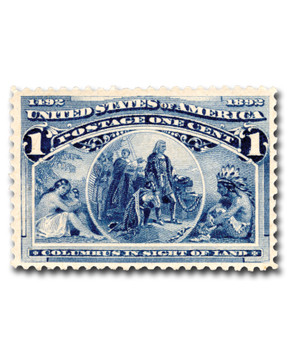
To make the color comparison as easy as possible, Mystic is including a used example of the normal 4-cent Columbian (Scott #233) along with an album page designed to display both stamps side by side. You will be able to see the color difference Brookman described — and once you see it, you will understand why this error has captivated collectors for more than 130 years.
The Columbian Exposition issue is one of the most celebrated series in all of U.S. philately — America's first commemorative stamps, issued in 1893 to mark the 400th anniversary of Columbus's arrival in the New World. The series remains among the most sought-after classics in stamp collecting. Across all 16 values in the series, Scott #233a is the only major error. The 4-cent value depicting the Fleet of Columbus — the Nina, Pinta, and Santa Maria — under full sail on the open Atlantic is one of the most dramatic designs in the entire set. That the only color error in this landmark series appears on one of its most striking stamps only adds to its significance.
Mystic has priced this stamp at $2,500 below Scott catalogue value — a significant savings on one of the rarest stamps in 19th-century American philately. A certified used example of Scott #233a is a once-in-a-collecting-lifetime opportunity. This is a stamp that defines a great collection. The last time Mystic offered a #233a, it sold quickly. This is the only example currently available, and we do not expect it to last long.
The 4-cent blue color error of the 1893 Columbian Exposition issue (Scott #233a) is one of the most celebrated errors in all of U.S. philately. The normal 4-cent Columbian (Scott #233) was printed in ultramarine, a color distinct enough from blue that the error should have been caught before any stamps left the press. It was not.
Only 15 used examples of Scott #233a are known to exist. This example shows a light cancel that leaves the design clearly visible, unusual for a stamp where most surviving used copies show heavier cancellations or other faults from having passed through the mail. The significance of this error is further highlighted by the fact that the Smithsonian Institution's National Postal Museum in Washington, D.C. counts an example among its permanent holdings. Very few collectors will ever see one of these stamps in person. The chance to own one is rarer still.
Because the color distinction requires experience and a reference point, expertizing is considered essential for any #233a. The Philatelic Foundation certificate that accompanies this stamp confirms its identity and provides the confidence that comes with independent expert authentication.
Philatelic scholar Lester Brookman, writing in his definitive reference "The United States Postage Stamps of the 19th Century," described the 4-cent blue color error this way: one error pane was found by J.V. Painter of Cleveland and bore the plate number D17, and it is almost certain that at least one more pane existed in this shade — and that the known used stamps came from that other pane. The Scott catalogue notes that almost all examples are valued with small faults, as virtually every known #233a shows some imperfection.
Brookman was emphatic about the rarity of this stamp. Many collectors have thought they had the 4-cent error of color, he wrote, but the truth is that few of them ever have or ever will see one — let alone own one. The shade is very different from the normal ultramarine. The common claim that it resembles the color of the 1-cent value is not exactly accurate, Brookman noted — it is much more like the 1-cent than the normal 4-cent, but the color seems to be richer and "more lively" than the 1-cent as well.
To make the color comparison as easy as possible, Mystic is including a used example of the normal 4-cent Columbian (Scott #233) along with an album page designed to display both stamps side by side. You will be able to see the color difference Brookman described — and once you see it, you will understand why this error has captivated collectors for more than 130 years.
The Columbian Exposition issue is one of the most celebrated series in all of U.S. philately — America's first commemorative stamps, issued in 1893 to mark the 400th anniversary of Columbus's arrival in the New World. The series remains among the most sought-after classics in stamp collecting. Across all 16 values in the series, Scott #233a is the only major error. The 4-cent value depicting the Fleet of Columbus — the Nina, Pinta, and Santa Maria — under full sail on the open Atlantic is one of the most dramatic designs in the entire set. That the only color error in this landmark series appears on one of its most striking stamps only adds to its significance.
Mystic has priced this stamp at $2,500 below Scott catalogue value — a significant savings on one of the rarest stamps in 19th-century American philately. A certified used example of Scott #233a is a once-in-a-collecting-lifetime opportunity. This is a stamp that defines a great collection. The last time Mystic offered a #233a, it sold quickly. This is the only example currently available, and we do not expect it to last long.
Related Items




Most Orders Ship
within 1 Business Day
90 Day Return Policy
Satisfaction Guaranteed
Earn Reward Points
for FREE Stamps & More