

Zoom the image with the mouse
#525/536
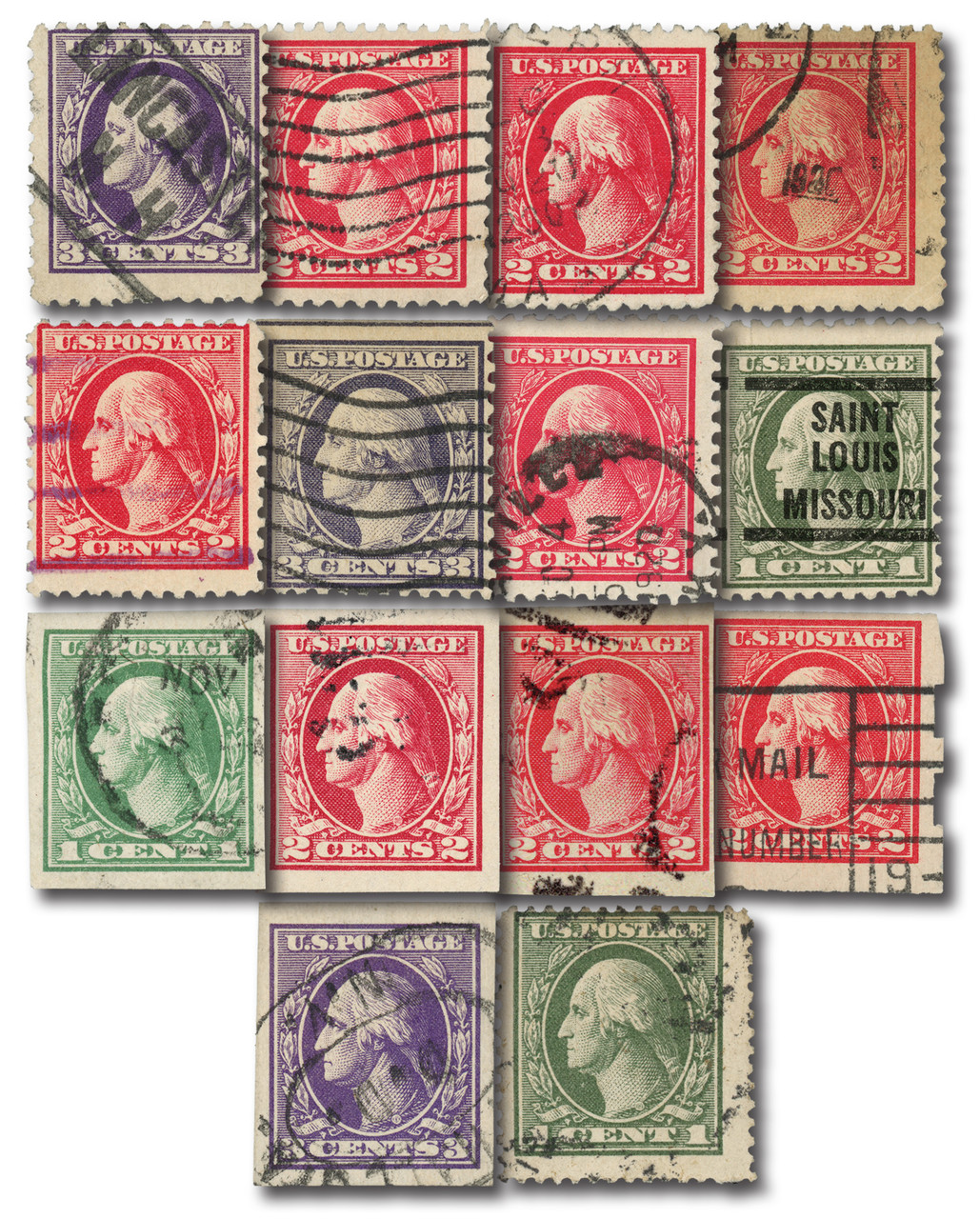
1918-20 US Offset Singles, 14 Stamps
$349.00
Share:
Own this set of 1918-20 Offset Printing stamps
Here are the stamps included:
525 - 1918 1c Washington, Gray Green, Offset Printing, Unwatermarked, Perf. 11
526 - 1920 2c Washington, Carmine, Offset Printing, Unwatermarked, Type IV, Perf. 11
527 - 1920 2c Washington, Carmine, Offset Printing, Unwatermarked, Type V, Perf. 11
528 - 1920 2c Washington, Carmine, Offset Printing, Unwatermarked, Type Va, Perf. 11
528A - 1920 2c Washington, Carmine, Offset Printing, Unwatermarked, Type VI, Perf. 11
528B - 1920 2c Washington, Carmine, Offset Printing, Unwatermarked, Type VII, Perf. 11
529 - 1918 3c Washington, Violet, Offset Printing, Unwatermarked, Type III, Perf. 11
530 - 1918 3c Washington, Purple, Offset Printing, Unwatermarked, Type IV, Perf. 11
531 - 1919 1c Washington, Green, Offset Printing, Unwatermarked, Imperforate
532 - 1920 2c Washington, Carmine Rose, Offset Printing, Unwatermarked, Type IV, Imperforate
533 - 1920 2c Washington, Carmine, Offset Printing, Unwatermarked, Type V, Imperforate
534 - 1920 2c Washington, Carmine, Offset Printing, Unwatermarked, Type Va, Imperforate
535 - 1918 3c Washington, Violet, Offset Printing, Unwatermarked, Type IV, Imperforate
536 - 1919 1c Washington, Gray Green, Offset Printing, Unwatermarked, Perf. 12.5
Series of 1917-20 Stamps
Lack of funds and materials during World War I caused the Bureau of Engraving and Printing to experiment with various printing methods. In addition to the rotary press, the new offset printing was tried.
In November of 1917, the first-class postage rate was increased from two cents to three cents, causing the demand for the 3¢ stamp to soar. Demand for the 1¢ stamp, to use along with the 2¢ stamp, also increased. In order to keep up with the public’s requests, the Bureau was operating at full capacity.
Inability to obtain the materials from Germany to produce a quality ink resulted in the use of inferior inks. These inks, which contained grit, were abrasive and had a tendency to wear out the plates faster. The average life of a plate was 10 days. They were wearing out faster than the Bureau could make them! Besides reducing the wear and tear on the plates, offset printing was advantageous because plates for this process could be made much quicker.
One of the negative aspects of using this method, however, was a less defined and somewhat blurry image. Some designs were modified in order to achieve a better impression. Eventually, a better grade of ink was found, and stamps were once again printed by the higher-quality engraving process.
Offset Printing
The Bureau of Engraving and Printing experimented with a printing method known as “offset printing” to increase production and save money. Photographs of a die proof used for flat plate and rotary stamps were enlarged and “re-touched” to make the details clearer. A photo negative of the altered image was then shrunk back to normal size and placed on a sensitized plate, one after the other. Next, an entire “mask” (image) of the plate was used to create the offset plates.
This allowed the bureau to create plates of much greater size than possible with the engraved method. Plates contained 400, 800, or 1600 stamp subjects.
Identifying Offset Printed Stamps
The ink on offset printed stamps feels smooth and flat. Stamps made by an engraved flat plate or rotary press have a textured feel, due to the raised ink on the surface. Offset printed stamps also often have poor-quality images. They typically don’t have as distinct detail as engraved stamps. Double-printed stamps were also relatively common. Sometimes sheets were so lightly printed they were run through again to save paper.
Own this set of 1918-20 Offset Printing stamps
Here are the stamps included:
525 - 1918 1c Washington, Gray Green, Offset Printing, Unwatermarked, Perf. 11
526 - 1920 2c Washington, Carmine, Offset Printing, Unwatermarked, Type IV, Perf. 11
527 - 1920 2c Washington, Carmine, Offset Printing, Unwatermarked, Type V, Perf. 11
528 - 1920 2c Washington, Carmine, Offset Printing, Unwatermarked, Type Va, Perf. 11
528A - 1920 2c Washington, Carmine, Offset Printing, Unwatermarked, Type VI, Perf. 11
528B - 1920 2c Washington, Carmine, Offset Printing, Unwatermarked, Type VII, Perf. 11
529 - 1918 3c Washington, Violet, Offset Printing, Unwatermarked, Type III, Perf. 11
530 - 1918 3c Washington, Purple, Offset Printing, Unwatermarked, Type IV, Perf. 11
531 - 1919 1c Washington, Green, Offset Printing, Unwatermarked, Imperforate
532 - 1920 2c Washington, Carmine Rose, Offset Printing, Unwatermarked, Type IV, Imperforate
533 - 1920 2c Washington, Carmine, Offset Printing, Unwatermarked, Type V, Imperforate
534 - 1920 2c Washington, Carmine, Offset Printing, Unwatermarked, Type Va, Imperforate
535 - 1918 3c Washington, Violet, Offset Printing, Unwatermarked, Type IV, Imperforate
536 - 1919 1c Washington, Gray Green, Offset Printing, Unwatermarked, Perf. 12.5
Series of 1917-20 Stamps
Lack of funds and materials during World War I caused the Bureau of Engraving and Printing to experiment with various printing methods. In addition to the rotary press, the new offset printing was tried.
In November of 1917, the first-class postage rate was increased from two cents to three cents, causing the demand for the 3¢ stamp to soar. Demand for the 1¢ stamp, to use along with the 2¢ stamp, also increased. In order to keep up with the public’s requests, the Bureau was operating at full capacity.
Inability to obtain the materials from Germany to produce a quality ink resulted in the use of inferior inks. These inks, which contained grit, were abrasive and had a tendency to wear out the plates faster. The average life of a plate was 10 days. They were wearing out faster than the Bureau could make them! Besides reducing the wear and tear on the plates, offset printing was advantageous because plates for this process could be made much quicker.
One of the negative aspects of using this method, however, was a less defined and somewhat blurry image. Some designs were modified in order to achieve a better impression. Eventually, a better grade of ink was found, and stamps were once again printed by the higher-quality engraving process.
Offset Printing
The Bureau of Engraving and Printing experimented with a printing method known as “offset printing” to increase production and save money. Photographs of a die proof used for flat plate and rotary stamps were enlarged and “re-touched” to make the details clearer. A photo negative of the altered image was then shrunk back to normal size and placed on a sensitized plate, one after the other. Next, an entire “mask” (image) of the plate was used to create the offset plates.
This allowed the bureau to create plates of much greater size than possible with the engraved method. Plates contained 400, 800, or 1600 stamp subjects.
Identifying Offset Printed Stamps
The ink on offset printed stamps feels smooth and flat. Stamps made by an engraved flat plate or rotary press have a textured feel, due to the raised ink on the surface. Offset printed stamps also often have poor-quality images. They typically don’t have as distinct detail as engraved stamps. Double-printed stamps were also relatively common. Sometimes sheets were so lightly printed they were run through again to save paper.
Related Items

Save Up To 19%


Save Up To 11%


Most Orders Ship
within 1 Business Day
90 Day Return Policy
Satisfaction Guaranteed
Earn Reward Points
for FREE Stamps & More