


Zoom the image with the mouse
#768
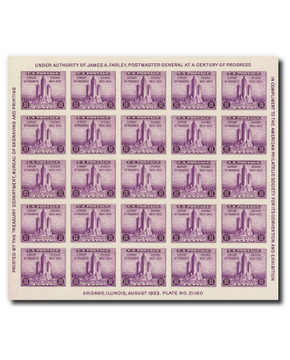
1935 3c Byrd Antarctic Expedition, Dark Blue, Souvenir Sheet
$35.00
Share:
U.S. #768
1935 3¢ Byrd Expedition
Issue Date: March 15, 1935
First City: Washington, DC
Quantity Issued: 267,200
This Souvenir Sheet commemorates Admiral Byrd’s historic expedition to the South Pole. President Franklin D. Roosevelt helped design the stamp, which depicts the route Byrd’s explorers traveled. Once there, a base camp dubbed Little America was set up. The camp included a mail station.
This stamp was not distributed for public sale. It was issued for use on letters mailed through the Little America Post Office, which was established at the base camp of the Byrd Antarctic Expedition in the territory of the South Pole. There was a service charge of 50¢ in addition to the 3¢ postage rate.
A 6-stamp souvenir sheet with the same design was printed at the National Stamp Exhibition. It was issued without gum or perforations. The sheet was only available at the exhibition while it was in progress. After February 19, it was placed on sale through the Philatelic Agency.
The souvenir sheet, #768, is part of special printing of stamps in 1935 known as Farley’s Follies.
What are Farley’s Follies?
In 1924, James A. Farley (1888-1976) met young Franklin Roosevelt at the Democratic National Convention. Four years later, FDR asked Farley to run his campaign for New York governor. Farley helped FDR win the elections for governor in 1928 and 1930. A driving force in the US political system, Farley helped FDR win the 1932 and 1936 presidential elections. Roosevelt made Farley his Postmaster General. Farley was pivotal in turning around the US Post Office Department. He helped the department finally turn a profit and revolutionized airmail service.
The infamous “Farley’s Follies” controversy began in 1933 when Farley removed several stamp sheets from the printing presses before they were gummed or perforated. He autographed these sheets (which were not available to the public) and gave them to colleagues and family, creating precious philatelic rarities. Stamp collectors were outraged when they discovered what had happened. Finally, the Post Office came up with a solution – the reissue in sheet form of all the stamps issued since March 4, 1933, in ungummed condition, all but the first two imperforate and in sufficient numbers to satisfy public demand. These stamps became known as Farley’s Follies.
Enjoy the beauty and history of these stamps. Add them all to your collection right away.
U.S. #768
1935 3¢ Byrd Expedition
Issue Date: March 15, 1935
First City: Washington, DC
Quantity Issued: 267,200
This Souvenir Sheet commemorates Admiral Byrd’s historic expedition to the South Pole. President Franklin D. Roosevelt helped design the stamp, which depicts the route Byrd’s explorers traveled. Once there, a base camp dubbed Little America was set up. The camp included a mail station.
This stamp was not distributed for public sale. It was issued for use on letters mailed through the Little America Post Office, which was established at the base camp of the Byrd Antarctic Expedition in the territory of the South Pole. There was a service charge of 50¢ in addition to the 3¢ postage rate.
A 6-stamp souvenir sheet with the same design was printed at the National Stamp Exhibition. It was issued without gum or perforations. The sheet was only available at the exhibition while it was in progress. After February 19, it was placed on sale through the Philatelic Agency.
The souvenir sheet, #768, is part of special printing of stamps in 1935 known as Farley’s Follies.
What are Farley’s Follies?
In 1924, James A. Farley (1888-1976) met young Franklin Roosevelt at the Democratic National Convention. Four years later, FDR asked Farley to run his campaign for New York governor. Farley helped FDR win the elections for governor in 1928 and 1930. A driving force in the US political system, Farley helped FDR win the 1932 and 1936 presidential elections. Roosevelt made Farley his Postmaster General. Farley was pivotal in turning around the US Post Office Department. He helped the department finally turn a profit and revolutionized airmail service.
The infamous “Farley’s Follies” controversy began in 1933 when Farley removed several stamp sheets from the printing presses before they were gummed or perforated. He autographed these sheets (which were not available to the public) and gave them to colleagues and family, creating precious philatelic rarities. Stamp collectors were outraged when they discovered what had happened. Finally, the Post Office came up with a solution – the reissue in sheet form of all the stamps issued since March 4, 1933, in ungummed condition, all but the first two imperforate and in sufficient numbers to satisfy public demand. These stamps became known as Farley’s Follies.
Enjoy the beauty and history of these stamps. Add them all to your collection right away.
Related Items



Most Orders Ship
within 1 Business Day
90 Day Return Policy
Satisfaction Guaranteed
Earn Reward Points
for FREE Stamps & More