


Zoom the image with the mouse
#B2-3
1915 Switzerland
$116.00
Share:
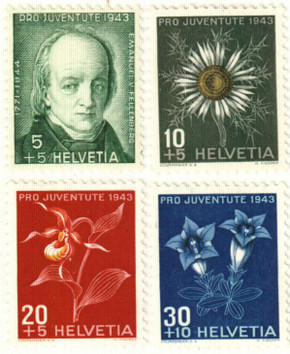
Issued on December 1, 1915, this pair of semi-postal stamps represents the second year of what would become one of the most beloved and longest-running charity stamp programs in philatelic history. The Pro Juventute Foundation was formed in 1912 as an advocate for children's needs and rights, drawing together some 3,000 local and specialized child welfare organizations that existed in Switzerland at that time. The Latin phrase "Pro Juventute" means "For the Children," and Switzerland has issued these stamps annually ever since — with regular annual issues beginning in 1915 and a set of three to five stamps released on December 1 each year until 1972. The 5-centime green stamp depicts a boy in Swiss folk costume, while the 10-centime red shows a girl from the Lucerne canton — the first in what would become a sustained series of regional costume designs that ran through 1917.
The 1915-17 stamps show children in folk costumes; subsequent series featured cantonal coats of arms, women in traditional dress, flowers, insects, birds, and other subjects over the following decades. Each year's release was eagerly anticipated by Swiss collectors and became a philatelic tradition as much as a charitable one. The surcharge on each stamp above the postal rate went directly to the Pro Juventute Foundation to support its work with Swiss children and youth. The December 1 release date placed the stamps in circulation just in time for the holiday season, making them natural choices for Christmas and New Year's correspondence.
Issued on December 1, 1915, this pair of semi-postal stamps represents the second year of what would become one of the most beloved and longest-running charity stamp programs in philatelic history. The Pro Juventute Foundation was formed in 1912 as an advocate for children's needs and rights, drawing together some 3,000 local and specialized child welfare organizations that existed in Switzerland at that time. The Latin phrase "Pro Juventute" means "For the Children," and Switzerland has issued these stamps annually ever since — with regular annual issues beginning in 1915 and a set of three to five stamps released on December 1 each year until 1972. The 5-centime green stamp depicts a boy in Swiss folk costume, while the 10-centime red shows a girl from the Lucerne canton — the first in what would become a sustained series of regional costume designs that ran through 1917.
The 1915-17 stamps show children in folk costumes; subsequent series featured cantonal coats of arms, women in traditional dress, flowers, insects, birds, and other subjects over the following decades. Each year's release was eagerly anticipated by Swiss collectors and became a philatelic tradition as much as a charitable one. The surcharge on each stamp above the postal rate went directly to the Pro Juventute Foundation to support its work with Swiss children and youth. The December 1 release date placed the stamps in circulation just in time for the holiday season, making them natural choices for Christmas and New Year's correspondence.
Related Items




Most Orders Ship
within 1 Business Day
90 Day Return Policy
Satisfaction Guaranteed
Earn Reward Points
for FREE Stamps & More