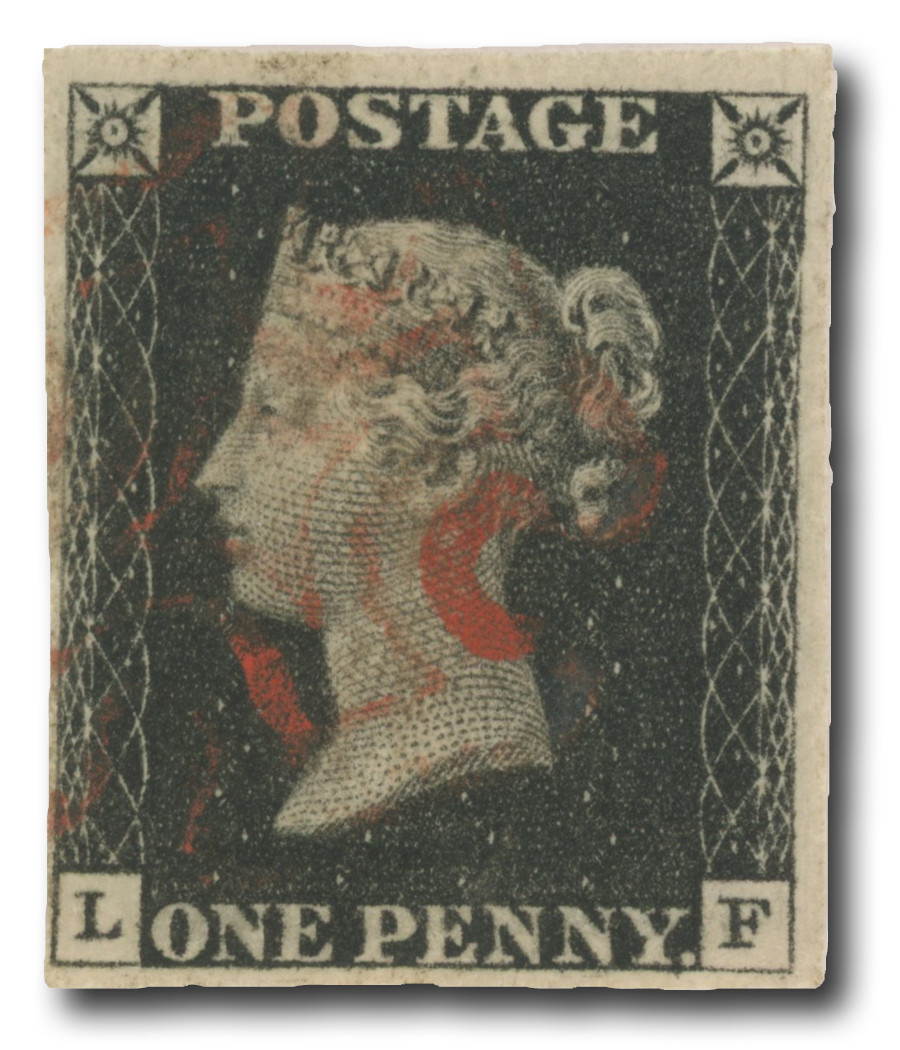

On May 1, 1840, postal history changed forever with the issuance of the world's first postage stamp – the Penny Black.
Before the Penny Black, sending mail in England was expensive and inefficient. Letters were priced by weight and distance, recipients paid the postage, and they could refuse delivery – leaving the Post Office with mounting losses.
Rowland Hill, an English educator and reformer, proposed a simple but revolutionary solution: a uniform penny rate paid in advance by the sender using a stamp. The design featured a profile of young Queen Victoria, and when it went on sale in May 1840, it transformed postal service forever.
The results were extraordinary. In just one year, British mail volume more than doubled from 82 million to 169 million pieces. For the first time, every citizen could afford to send a letter.
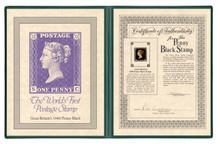
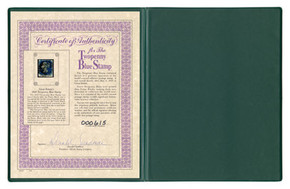
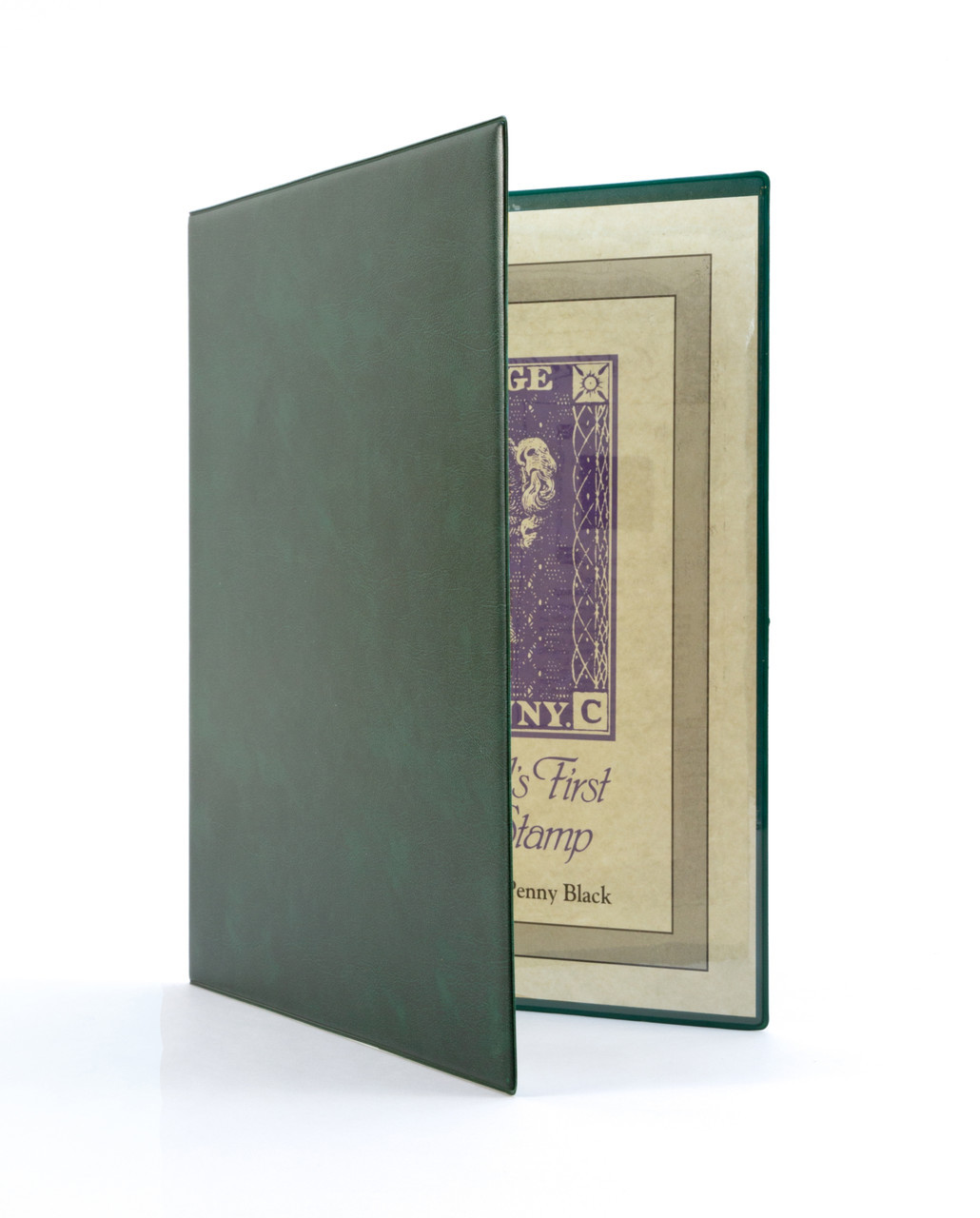
Imagine the excitement and pride of owning such a storied piece of history. This philatelic treasure comes inside a presentation folder with a beautifully designed album page. You’ll find a certificate of Authenticity and the engaging history of the famous stamp. Don’t miss this chance to own a piece of postal history!
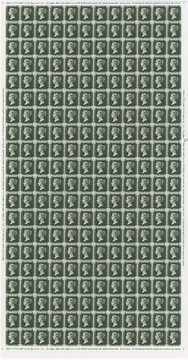
What makes each Penny Black particularly special is its distinctive lettering system. Printed in sheets of 240 stamps, every stamp received two hand-punched corner letters indicating its position on the sheet – "AA" for the upper left, continuing through the alphabet. This means each Penny Black is uniquely identifiable, adding to both its historical significance and collectibility.
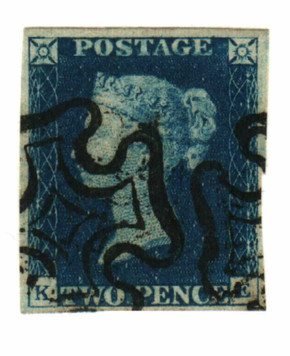
Penny Blacks were printed with very narrow margins between stamps. When the sheets were cut, many stamps were left without margins on one or more sides. Few Penny Blacks survived with three to four margins intact, making well-preserved examples especially prized by collectors.
Queen Victoria was born on May 24, 1819, to Edward, Duke of Kent and Victoria, Princess of Saxe-Coburg of Germany at Kensington Palace. She was baptized in the name of Alexandrina Victoria after her cousin, Tsar, Alexander I of Russia. Although her first language was German, Drina (as she was called at home) also learned English and French.
Victoria became Queen of England at age 18 when her uncle, William IV, died. (Her father had died when she was eight months old.) Three years after being crowned, Victoria married her German cousin, Prince Albert of Saxe-Coburg-Gotha. Their loving marriage produced nine children – 4 sons and 5 daughters. However, in 1861 Albert died of typhoid, likely caused by primitive sanitary conditions at Windsor Castle. Devastated by her husband’s death, in addition to her mother’s death months earlier, Victoria went into seclusion that lasted 20 years, wearing black for the rest of her life.
In 1887, Victoria celebrated her Golden Jubilee, the 50th anniversary of her becoming Queen. Nine years later, she reached another milestone, surpassing George III as the longest reigning monarch in English, Scottish, and British history. She chose to celebrate this milestone the following year, in 1897, to coincide with her Diamond Jubilee (60th anniversary as Queen).
Victoria’s reign was of immense importance. Because of its sheer length, it insured the continuance of the Royal Family’s place in British government. In the 1840s, social bitterness was openly expressed in terms of revolution and class warfare. It was not an easy time. Monarchies were crumbling all around as class distinctions were disappearing with the advance of the industrial age and a generally improved standard of living.
Through Victoria’s influence, the present-day rights of the Crown were established: to be consulted, to encourage, and to warn. While her actual power continued to ebb and parliamentary rule advanced, Victoria’s real influence grew. She intervened in disputes between political factions, and was a major factor in all foreign policy matters. Victoria was respected by the English people for her honesty and direct simplicity.
Queen Victoria died on January 22, 1901, at the Osborne House on the Isle of Wight. she left behind a Royal Government both restored to popularity and dignity. She also left 37 great-grandchildren. In her lifetime, Victoria never liked black funerals, so in her honor, London was decorated in purple and white. US President William McKinley ordered all American flags be flown at half-mast in her honor. This was the first time a foreign monarch was paid this respect.
In all, Victoria reigned for 63 years, seven months, and two days. For over a century she held the record for the longest reign of any British monarch and the longest-lived monarch (she lived three days longer than her grandfather, George III). But her great-great-granddaughter Elizabeth II recently surpassed these records.
On May 1, 1840, postal history changed forever with the issuance of the world's first postage stamp – the Penny Black.
Before the Penny Black, sending mail in England was expensive and inefficient. Letters were priced by weight and distance, recipients paid the postage, and they could refuse delivery – leaving the Post Office with mounting losses.
Rowland Hill, an English educator and reformer, proposed a simple but revolutionary solution: a uniform penny rate paid in advance by the sender using a stamp. The design featured a profile of young Queen Victoria, and when it went on sale in May 1840, it transformed postal service forever.
The results were extraordinary. In just one year, British mail volume more than doubled from 82 million to 169 million pieces. For the first time, every citizen could afford to send a letter.
Imagine the excitement and pride of owning such a storied piece of history. This philatelic treasure comes inside a presentation folder with a beautifully designed album page. You’ll find a certificate of Authenticity and the engaging history of the famous stamp. Don’t miss this chance to own a piece of postal history!
What makes each Penny Black particularly special is its distinctive lettering system. Printed in sheets of 240 stamps, every stamp received two hand-punched corner letters indicating its position on the sheet – "AA" for the upper left, continuing through the alphabet. This means each Penny Black is uniquely identifiable, adding to both its historical significance and collectibility.
Penny Blacks were printed with very narrow margins between stamps. When the sheets were cut, many stamps were left without margins on one or more sides. Few Penny Blacks survived with three to four margins intact, making well-preserved examples especially prized by collectors.
Queen Victoria was born on May 24, 1819, to Edward, Duke of Kent and Victoria, Princess of Saxe-Coburg of Germany at Kensington Palace. She was baptized in the name of Alexandrina Victoria after her cousin, Tsar, Alexander I of Russia. Although her first language was German, Drina (as she was called at home) also learned English and French.
Victoria became Queen of England at age 18 when her uncle, William IV, died. (Her father had died when she was eight months old.) Three years after being crowned, Victoria married her German cousin, Prince Albert of Saxe-Coburg-Gotha. Their loving marriage produced nine children – 4 sons and 5 daughters. However, in 1861 Albert died of typhoid, likely caused by primitive sanitary conditions at Windsor Castle. Devastated by her husband’s death, in addition to her mother’s death months earlier, Victoria went into seclusion that lasted 20 years, wearing black for the rest of her life.
In 1887, Victoria celebrated her Golden Jubilee, the 50th anniversary of her becoming Queen. Nine years later, she reached another milestone, surpassing George III as the longest reigning monarch in English, Scottish, and British history. She chose to celebrate this milestone the following year, in 1897, to coincide with her Diamond Jubilee (60th anniversary as Queen).
Victoria’s reign was of immense importance. Because of its sheer length, it insured the continuance of the Royal Family’s place in British government. In the 1840s, social bitterness was openly expressed in terms of revolution and class warfare. It was not an easy time. Monarchies were crumbling all around as class distinctions were disappearing with the advance of the industrial age and a generally improved standard of living.
Through Victoria’s influence, the present-day rights of the Crown were established: to be consulted, to encourage, and to warn. While her actual power continued to ebb and parliamentary rule advanced, Victoria’s real influence grew. She intervened in disputes between political factions, and was a major factor in all foreign policy matters. Victoria was respected by the English people for her honesty and direct simplicity.
Queen Victoria died on January 22, 1901, at the Osborne House on the Isle of Wight. she left behind a Royal Government both restored to popularity and dignity. She also left 37 great-grandchildren. In her lifetime, Victoria never liked black funerals, so in her honor, London was decorated in purple and white. US President William McKinley ordered all American flags be flown at half-mast in her honor. This was the first time a foreign monarch was paid this respect.
In all, Victoria reigned for 63 years, seven months, and two days. For over a century she held the record for the longest reign of any British monarch and the longest-lived monarch (she lived three days longer than her grandfather, George III). But her great-great-granddaughter Elizabeth II recently surpassed these records.