


Zoom the image with the mouse
#C7//CE2
1926-2001 U.S. Airmails, Collection of 130 Stamps with Free Album
$295.00
Share:
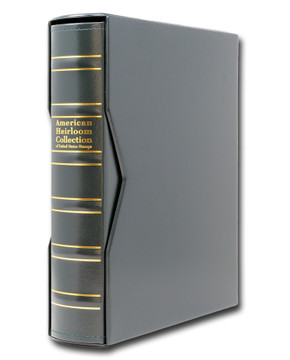
Get an Instant U.S. Airmail Collection with FREE Album
Give your collection a boost with this giant set of 130 airmail stamps issued from 1926-2001 – including the Airmail Special Delivery Stamps. You’ll find the “Spirit of St. Louis,” Orville and Wilbur Wright, Amelia Earhart, the Future Mail Transportation se-tenant and lots more. A great opportunity to start or add to your airmail collection.
Here's what you'll get:
CE1 1934 16c Airmail Special Delivery
CE2 1936 16c Airmail Special Delivery
C7 1926 10c Airmail
C8 1926 15c Airmail
C9 1927 20c Airmail
C10 1927 10c Lindbergh
C11 1928 5c Beacon on Rocky Mountain
C12 1930 5c Winged Globe Flat Plate
C16 1931 5c Rotary
C17 1932 8c Rotary
C19 1934 6c Rotary
C20 1935 25c Trans-Pacific blue
C21 1937 20c Trans-Pacific green
C22 1937 50c Trans-Pacific carmine
C23 1938 6c Airmail Eagle
C24 1939 30c Trans-Atlantic Issue
C25-31 1941-44 6c-50c Rotary Press (7 stamps)
C32-36 1946-47 Rotary Press (5 stamps)
C37 1948 5c DC-4 Skymaster Coil
C38 1948 5c New York City Jubilee
C39 1949 6c DC-4 Skymaster
C40 1949 6c Airmail Alexandria, VA
C41 1949 6c DC-4 Skymaster
C42-44 1949 Universal Postal Union (3 stamps)
C45 1949 6c Wright Brothers
C46 1952 80c Airmail Diamond Head
C47 1953 6c Airmail Powered Flight
C48 1954 4c Airmail Eagle
C49 1957 6c Airmail Air Force
C50 1958 5c Airmail Design of 1954
C51 1958 7c Airmail Jet blue
C52 1958 7c Jet
C53-56 1959 Commemoratives (4 stamps)
C57-63 1959-61 Regular Issues (7 stamps)
C64-69 1962-64 Regular Issues (6 stamps)
C70-76 1967-69 Issues (7 stamps)
C77-83 1971-73 Regular Issues (7 stamps)
C84-86 1972-73 Commemoratives (3 stamps)
C87-90 1974-76 Regular Issues (4 stamps)
C91-96 1978-79 Commemoratives (6 stamps)
C97-100 1979-80 Commemoratives (4 stamps)
C101-12 1983 Summer Olympics
C113-16 1985 Commemoratives (4 stamps)
C117-19 1988 Airmail Commemoratives (3 stamps)
C120-25 1989 45c Commemoratives (6 stamps)
C126 1989 45c Future Mail Transportation (4 stamps)
C127-32 1990-1993 Commemoratives (6 stamps)
C133 1999 48c Niagara Falls
C134 1999 40c Rio Grande
C135 2000 60c Grand Canyon
C136 2001 70c Nine-Mile Prairie
C137 2001 80c Mt. McKinley
C138 2001 60c Acadia National Park
ES390 Mystic Heirloom Binder 3-Ring
GS607 1918-2012 Mystic US Airmail Page
First Official U.S. Airmail Flight
On September 23, 1911, Earle Ovington made America’s first airmail delivery between Garden City and Mineola, New York.
Born on December 20, 1879, in Chicago, Illinois, Ovington loved to experiment with electricity from a young age. At 16, he went to work for the Edison Electric Illuminating Company. But he soon realized that he’d need a formal education if he wanted to succeed. So he went to the Massachusetts Institute of Technology. There, Ovington’s frequent electrical experiments earned him the nickname “Volts.” After graduating, he formed the Ovington Motor Company to bring European motorcycles to the US.
Then in 1910 Ovington saw planes in the air for the first time and was fascinated by the physics. He immediately set out for France to attend flight school. Ovington completed eight flights before earning his pilot’s license in January 1911. He then returned to America with his own Bleriot monoplane sporting his lucky number “13” on the tail. That spring Ovington began flying at aviation meets. He was the first person to fly in Connecticut and over Boston. Spectators said his plane resembled a dragonfly so he had the word painted on the underside of the wings.
That summer, Ovington was among several pilots preparing for the first tournament of the fall season, the International Aviation Meet hosted by the Aero Club of New York. But pilots weren’t the only ones looking forward to the tournament. Postmaster General Frank Hitchcock had long supported the idea of delivering mail by airplane. He’d even made previous attempts at such flights, but they were unsuccessful. With the popular event coming up, he saw his opportunity to make his dream a reality. Working with the event’s planners, he arranged to have airmail deliveries made throughout the tournament, which ran from September 23 to October 1.
Hitchcock contacted a few different pilots before Ovington was given the honor. Some turned it down for lack of pay. One accepted but had mechanical issues the day of the flight. So they found Ovington and asked him. He responded with his own question – if this was to be the first airmail flight in the US. And when he was told that it was, he agreed.
Leading up to the tournament, the Post Office Department went through extensive preparations. They handed out fliers informing the public of the historic first flight and set up mailboxes all around the grounds as well as Aeroplane Station No.1, where they’d sort the mail for the flight.
For several hours, the post office officials collected the letters, applied postmarks, and neatly stacked and tied them in bundles. Ovington’s wife dramatically recalled what happened next:
“About three in the afternoon a hush fell over the field. The time for the flight had come. Noiselessly the big crowd watched Ovie’s three French mechanics wheel out his Bleriot monoplane, “The Dragonfly.” A murmur went through the crowd. A small boy broke away from his mother, ran up to Ovie, and asked him for his autograph. Ovie gave it to him. The mechanics made a few last-minute adjustments. Governor Woodruff said something to Ovie.
Flashbulbs went off, and cameras clicked. The police held the roped crowd back. Now the sun, which a few minutes before had dropped behind one of the white, fleecy clouds, came out again in all of its glory. The stage was set, and Ovie took center of it. Putting on his goggles and his “crash” helmet, he climbed into the cockpit of the plane. Taking a last look at the crowd, he winked at the little boy, and waved goodbye to me.”
Ovington was then handed a mailbag containing 640 letters and 1,280 postcards. With nowhere else to set the bag, he balanced it on his knees during the short flight. Unable to land the plane while holding the mail, he dropped the bag from the plane. The bag burst open when it hit the ground, sending the mail all over the field. The letters were then retrieved and taken to the Mineola post office. Ovington returned to the tournament within 10 minutes of his initial takeoff. He went on to do this mail delivery for the rest of the event, delivering a total of 43,247 letters.
A stamp collector himself, Ovington created cachets and signed thousands of covers honoring his historic flight. He continued to fly until his death in 1936.
In 1961, the Post Office Department planned to release a stamp marking the 50th anniversary of his historic flight. But when UN Secretary-General Dag Hammarskjold died suddenly, they asked Ovington’s widow if she’d mind if the stamp was delayed a year. She agreed, but the stamp was never issued. His children later petitioned for a stamp in his honor, but that never happened either.
Related Items

Save Up To 19%



Save Up To 11%


Most Orders Ship
within 1 Business Day
90 Day Return Policy
Satisfaction Guaranteed
Earn Reward Points
for FREE Stamps & More