

Zoom the image with the mouse
#MC1a
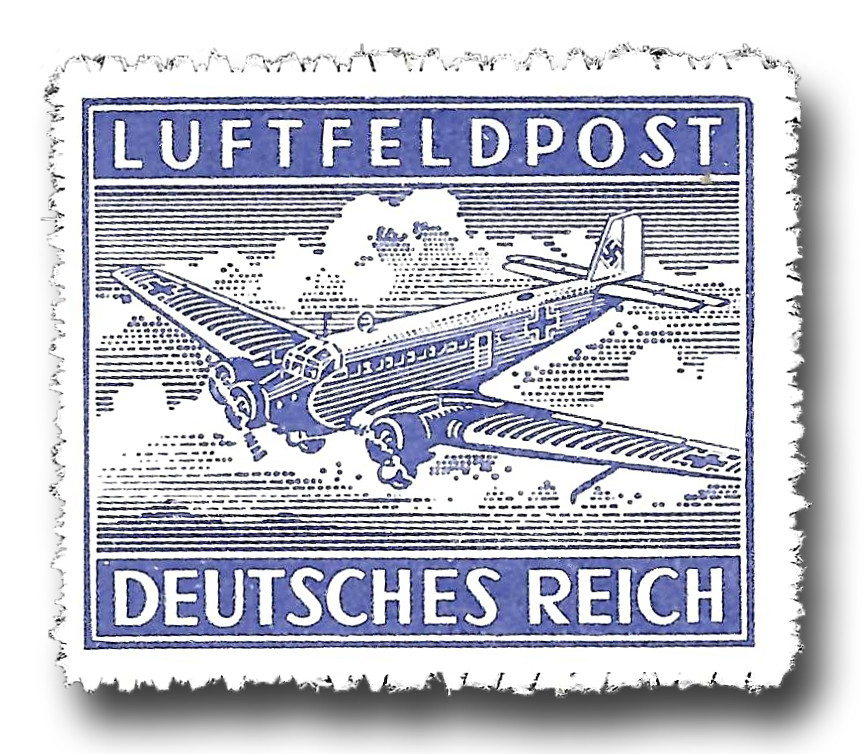
1942 Germany, Military Airmail Stamp, Junkers 52 Transport, Third Reich
$1.95
Share:
This German airmail stamp depicts the Junkers 52, one of the most recognizable transport aircraft of the early aviation era.
Issued during the period of the Deutsches Reich, the stamp is inscribed “Luftfeldpost,” meaning air field post. This indicates its role within a military postal system that relied on aircraft to move mail efficiently between airfields and operational areas. As aviation technology advanced, aircraft like the Junkers 52 became essential tools for communication, logistics, and transport.
The Junkers 52 was introduced in the early 1930s and quickly became a workhorse aircraft. Known for its corrugated metal construction, reliability, and ability to operate from rough airstrips, it was widely used for both civilian and military purposes. The Junkers 52 served as a passenger plane, cargo transport, and mail carrier, making it a familiar sight across Europe and beyond.
The stamp’s design presents the aircraft in flight with clear emphasis on its distinctive shape and sturdy construction. The strong lines and uncluttered background reflect the graphic style of German stamp engraving at the time, focusing attention on the aircraft itself rather than decorative detail.
Stamps such as this document the close relationship between aviation and postal services in the early 20th century. They show how aircraft like the Junkers 52 moved from experimental designs to practical, everyday tools that reshaped communication and transportation.
This German airmail stamp depicts the Junkers 52, one of the most recognizable transport aircraft of the early aviation era.
Issued during the period of the Deutsches Reich, the stamp is inscribed “Luftfeldpost,” meaning air field post. This indicates its role within a military postal system that relied on aircraft to move mail efficiently between airfields and operational areas. As aviation technology advanced, aircraft like the Junkers 52 became essential tools for communication, logistics, and transport.
The Junkers 52 was introduced in the early 1930s and quickly became a workhorse aircraft. Known for its corrugated metal construction, reliability, and ability to operate from rough airstrips, it was widely used for both civilian and military purposes. The Junkers 52 served as a passenger plane, cargo transport, and mail carrier, making it a familiar sight across Europe and beyond.
The stamp’s design presents the aircraft in flight with clear emphasis on its distinctive shape and sturdy construction. The strong lines and uncluttered background reflect the graphic style of German stamp engraving at the time, focusing attention on the aircraft itself rather than decorative detail.
Stamps such as this document the close relationship between aviation and postal services in the early 20th century. They show how aircraft like the Junkers 52 moved from experimental designs to practical, everyday tools that reshaped communication and transportation.
Related Items



Most Orders Ship
within 1 Business Day
90 Day Return Policy
Satisfaction Guaranteed
Earn Reward Points
for FREE Stamps & More