

Zoom the image with the mouse
#R1
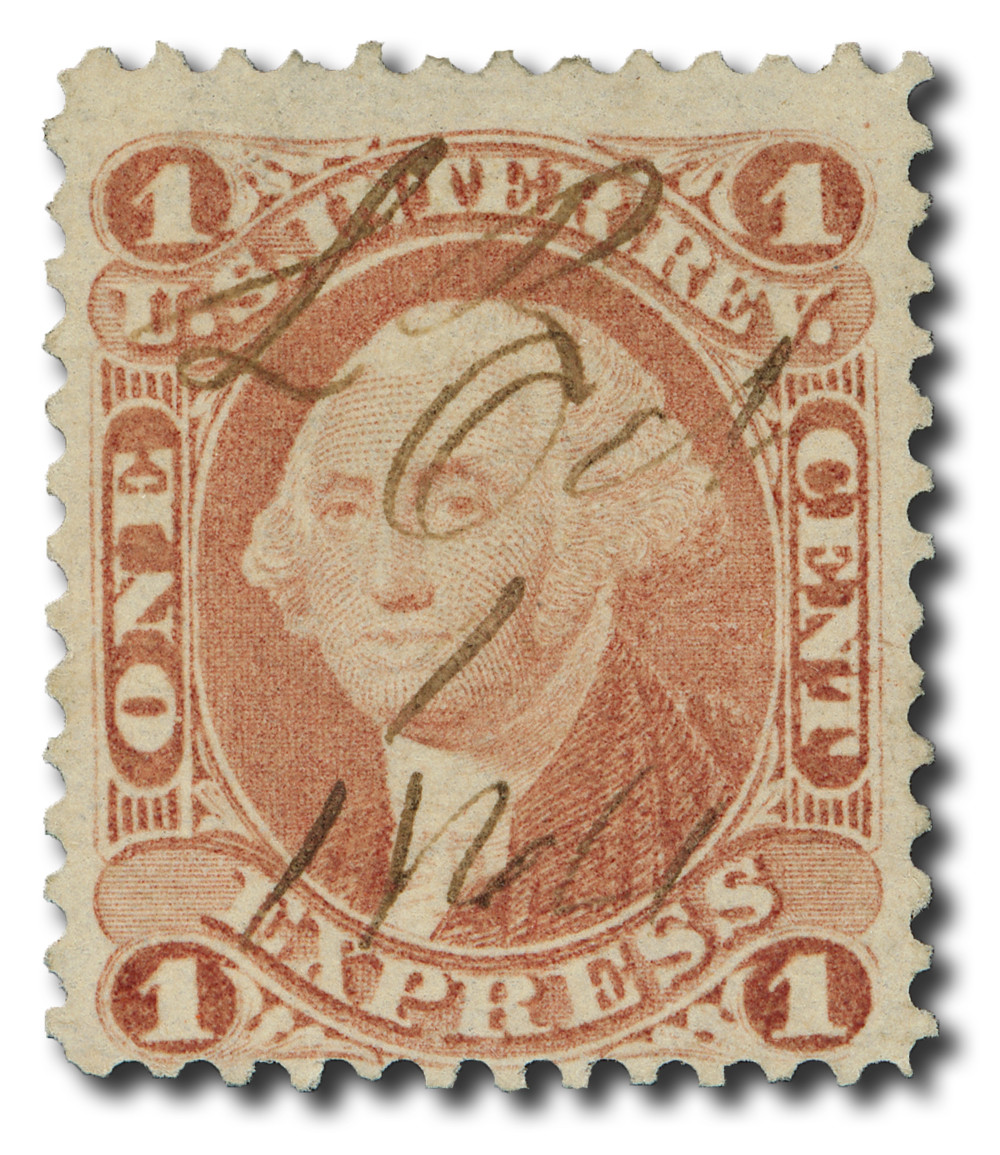
1862-71 1c U.S. Internal Revenue Stamp, Express, Red, Perf. 12
$4.25
Share:
By 1861, the Civil War had pushed the federal government to the brink of financial crisis. The Union had lost tariff revenue previously collected on goods imported by the seceded Southern states, while the cost of fighting the war climbed rapidly, with the government spending roughly fifty million dollars on troops and another fifty million on supplies in 1861 alone. Treasury Secretary Salmon P. Chase initially hoped to fund the war through loans, but early Union defeats shook investor confidence, making a substantial new source of revenue necessary to reassure lenders of the nation's financial stability.
On July 1, 1862, President Abraham Lincoln signed the Revenue Act of 1862 into law, creating a broad new system of taxation on documents and consumer goods, along with the Office of the Commissioner of Internal Revenue to oversee collection. Rather than issue receipts or paperwork for every taxed transaction, the government required stamps to be affixed to taxed items as visible proof that the tax had been paid. This one cent stamp was designated for use on express receipts, one of dozens of different stamp types created to tax specific categories of documents and goods, including proprietary items like medicine, matches, and playing cards.
Engraver and printer John Butler, a confidant of President Lincoln, partnered with Joseph Carpenter to win the printing contract for these new revenue stamps, submitting their first completed plates within just three weeks of receiving the assignment. By the end of 1862, the Bureau of Internal Revenue had issued ninety four separate stamp designs to cover the wide range of newly taxed items.
By 1861, the Civil War had pushed the federal government to the brink of financial crisis. The Union had lost tariff revenue previously collected on goods imported by the seceded Southern states, while the cost of fighting the war climbed rapidly, with the government spending roughly fifty million dollars on troops and another fifty million on supplies in 1861 alone. Treasury Secretary Salmon P. Chase initially hoped to fund the war through loans, but early Union defeats shook investor confidence, making a substantial new source of revenue necessary to reassure lenders of the nation's financial stability.
On July 1, 1862, President Abraham Lincoln signed the Revenue Act of 1862 into law, creating a broad new system of taxation on documents and consumer goods, along with the Office of the Commissioner of Internal Revenue to oversee collection. Rather than issue receipts or paperwork for every taxed transaction, the government required stamps to be affixed to taxed items as visible proof that the tax had been paid. This one cent stamp was designated for use on express receipts, one of dozens of different stamp types created to tax specific categories of documents and goods, including proprietary items like medicine, matches, and playing cards.
Engraver and printer John Butler, a confidant of President Lincoln, partnered with Joseph Carpenter to win the printing contract for these new revenue stamps, submitting their first completed plates within just three weeks of receiving the assignment. By the end of 1862, the Bureau of Internal Revenue had issued ninety four separate stamp designs to cover the wide range of newly taxed items.
Related Items


Most Orders Ship
within 1 Business Day
90 Day Return Policy
Satisfaction Guaranteed
Earn Reward Points
for FREE Stamps & More