


Zoom the image with the mouse
#R170
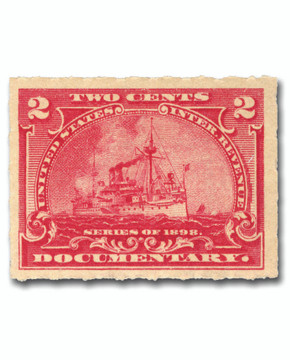
1898 40c Battleship, Documentary Revenue Stamp, Blue Lilac, Rouletted 5.5
$195.00
Share:
U.S. Revenue Stamps – Expand Your Collection or Start a New One
Intricate Revenue stamps feature the rich detail and historical importance of classic U.S. stamps for a fraction of the price. Acquiring a collection of these seldom-seen stamps is easy and affordable with Mystic as your collecting partner.
When the Civil War erupted in 1861, the country was on the verge of bankruptcy. A plan was developed to generate internal revenue – money collected from taxes placed on domestic items such as tobacco, alcohol, medicine, perfume and playing cards. Stamps were provided as proof of payment.
Examining used U.S. Revenue stamps offers a window into the past – the government required several unusual cancellation techniques such as private cancels, manuscript initials and perforated initials. The same legislation that created these stamps also created the Internal Revenue Service (IRS) and the Bureau of Engraving and Printing (BEP).
Until 1862, specific Revenue stamps were required for many taxable items – leading to a wealth of interesting stamps for modern collectors. Imperforate and “part-perf” error stamps present another challenging – yet affordable – collecting opportunity.
The Series of 1898 Documentary revenues rank among the most visually compelling issues in all of American philately, and the 40-cent value is a standout. Printed in a rich violet-blue, this stamp features a dramatic central vignette of a US Navy battleship — widely identified as the USS New York — steaming at full power. The design perfectly captures the naval confidence of an era when America was asserting itself as a world power on the seas off Cuba and the Philippines.
The battleship design was selected for multiple denominations across the series, but the 40-cent denomination occupies a distinct place as one of the mid-to-high face values — stamps that appeared on significant commercial and legal transactions of the period.
The Series of 1898 has attracted serious collector interest for well over a century, valued both for the historical context of the Spanish-American War period and for the sheer handsomeness of the engraved battleship imagery.
Related Items


Most Orders Ship
within 1 Business Day
90 Day Return Policy
Satisfaction Guaranteed
Earn Reward Points
for FREE Stamps & More