

Zoom the image with the mouse
#R53
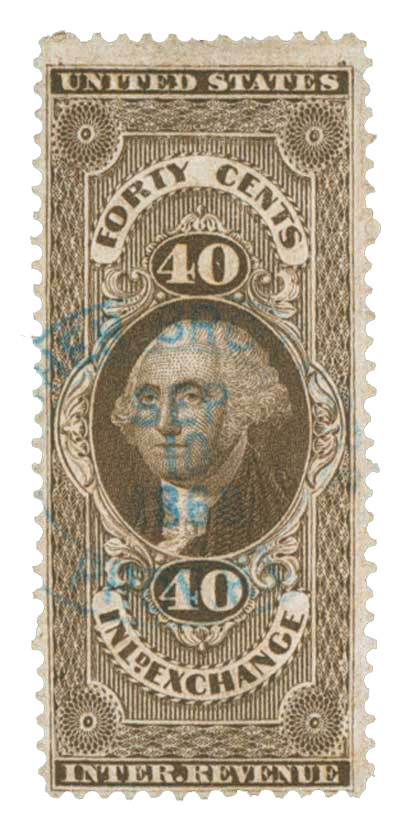
1862-71 40c U.S. Internal Revenue Stamp, Inland Exchange, Brown, Perf. 12
$16.00
Share:
By 1861, the Civil War had pushed the federal government toward financial crisis, as the Union lost tariff revenue previously collected on goods imported by the seceded Southern states while the cost of the war climbed rapidly. Treasury Secretary Salmon P. Chase initially hoped to fund the war through loans, but early Union defeats shook investor confidence, making new sources of revenue necessary to reassure lenders of the nation's financial stability. On July 1, 1862, President Abraham Lincoln signed the Revenue Act of 1862 into law, creating a broad new system of taxation on documents and consumer goods, along with the Office of the Commissioner of Internal Revenue to oversee collection.
This forty cent stamp was designated for use on inland exchange documents, a category covering bills of exchange, promissory notes, and similar financial instruments used to settle debts and transfer funds within the country. The required tax rate on these documents varied depending on the dollar amount involved and shifted several times as Congress adjusted the law in the years following its original passage, meaning the same denomination sometimes covered different transaction amounts depending on when it was used. All thirty denominations in this first revenue stamp series, ranging from one cent up to two hundred dollars, featured a portrait of George Washington, giving the entire issue a unified design despite covering such a wide range of taxable transactions.
Engraver and printer John Butler, a confidant of President Lincoln, partnered with Joseph Carpenter to win the printing contract for these new revenue stamps, completing the first plates within just three weeks of receiving the assignment. Because the tax on financial documents applied to relatively substantial transactions, higher denominations like this forty cent inland exchange stamp saw far less everyday use than the smaller values covering routine items like proprietary medicines or playing cards, making surviving examples with genuine period cancellations comparatively scarce today.
Related Items

Save Up To 19%



Save Up To 11%


Most Orders Ship
within 1 Business Day
90 Day Return Policy
Satisfaction Guaranteed
Earn Reward Points
for FREE Stamps & More