


Zoom the image with the mouse
#RF2
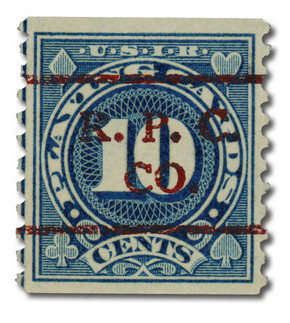
1894 2c Playing Card Stamp, Ultramarine, Unwatermarked, Rouletted 5.5
$45.00
Share:
This stamp is a special tax stamp created under the Act of August 1894, a law that placed a tax on playing cards sold in the United States. Manufacturers were required to attach one of these stamps to each deck of cards before it could be sold, and the design clearly spells out its purpose right on the face of the stamp. This particular example is unwatermarked and shows rouletted separations, a method where small slits are cut between stamps instead of the punched holes used in standard perforations.
Playing cards were first taxed back in 1862, with the tax levied to help fund the Union's Civil War effort. That original 1862 law also gave companies taxed under the proprietary schedules, which included playing cards, medicines, and perfumes, the option to design their own tax stamps. Manufacturers who took advantage of this could design and pay for their own dies, and in return received a discount of 5 to 10 percent along with the ability to advertise their products right on the stamp. The original playing card tax lapsed after 1871, and cards went untaxed for over two decades until the 1894 law revived the practice and called for an entirely new series of stamps to show the tax had been paid. This stamp belongs to that later series, reflecting a fresh chapter in the long running history of American playing card taxation.
This stamp is a special tax stamp created under the Act of August 1894, a law that placed a tax on playing cards sold in the United States. Manufacturers were required to attach one of these stamps to each deck of cards before it could be sold, and the design clearly spells out its purpose right on the face of the stamp. This particular example is unwatermarked and shows rouletted separations, a method where small slits are cut between stamps instead of the punched holes used in standard perforations.
Playing cards were first taxed back in 1862, with the tax levied to help fund the Union's Civil War effort. That original 1862 law also gave companies taxed under the proprietary schedules, which included playing cards, medicines, and perfumes, the option to design their own tax stamps. Manufacturers who took advantage of this could design and pay for their own dies, and in return received a discount of 5 to 10 percent along with the ability to advertise their products right on the stamp. The original playing card tax lapsed after 1871, and cards went untaxed for over two decades until the 1894 law revived the practice and called for an entirely new series of stamps to show the tax had been paid. This stamp belongs to that later series, reflecting a fresh chapter in the long running history of American playing card taxation.
Related Items




Most Orders Ship
within 1 Business Day
90 Day Return Policy
Satisfaction Guaranteed
Earn Reward Points
for FREE Stamps & More