

Zoom the image with the mouse
#RT19d
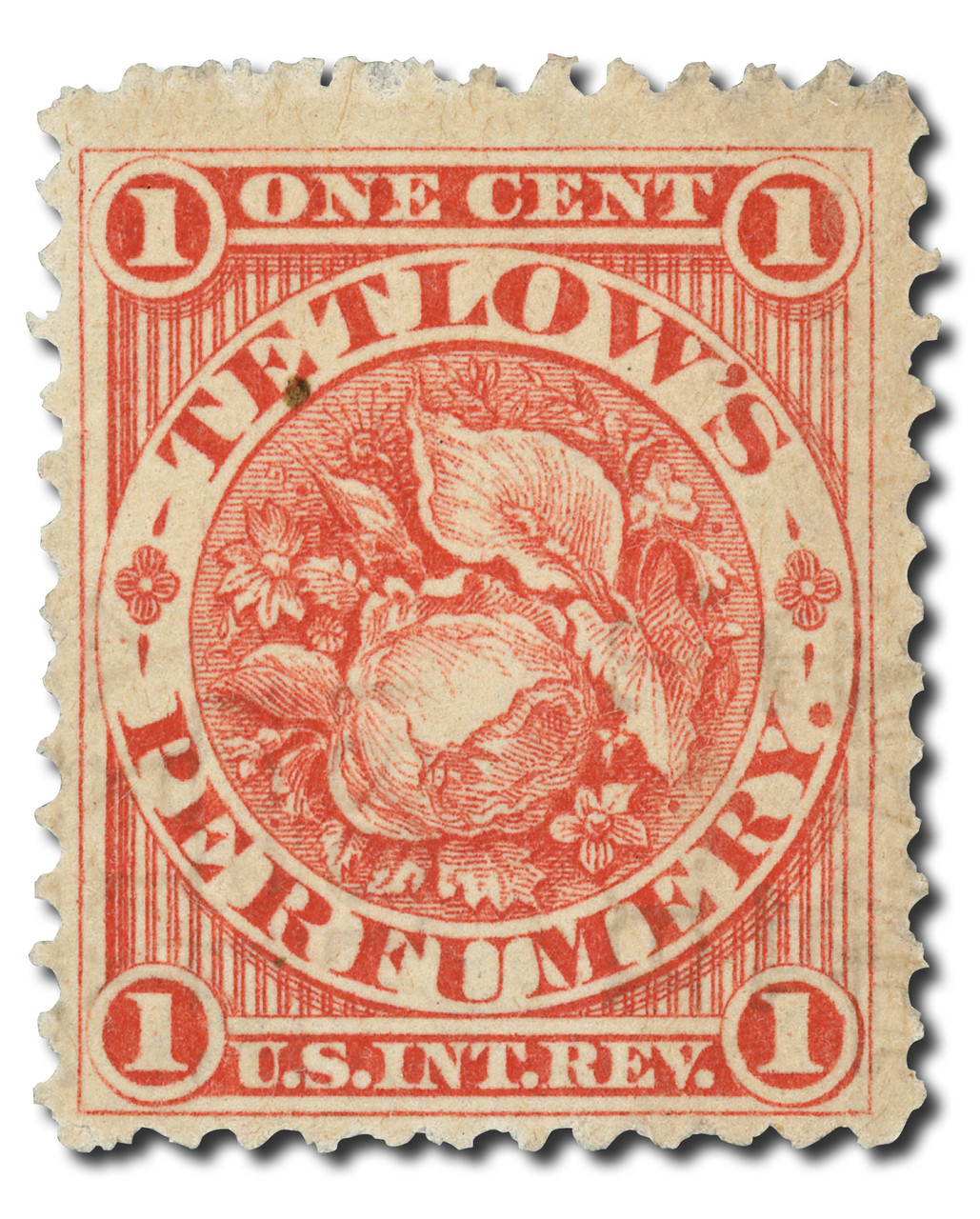
1878-83 1c Tetlow's Perfumery, Vermilion, Double Line Watermark USIR
$15.50
Share:
This 1-cent vermilion private die perfume revenue stamp was issued by Tetlow's Perfumery of Philadelphia, Pennsylvania, under the Revenue Act of 1862. Henry Tetlow was a Philadelphia perfumer who discovered a safe and inexpensive base for face powder using zinc oxide in 1866 — a significant development at a time when many face powders on the market contained lead, arsenic, or bismuth. He acquired the Swan Down face powder brand in 1875 for $550 and built it into the company's most enduring product. Gossamer face powder followed in 1876. Both products were marketed discreetly, as cosmetics were not openly discussed in polite Victorian society — advertising of the era used subtle visual cues rather than direct claims to reach women who were reluctant to be seen purchasing beauty products openly. The double line watermark USIR variety dates this stamp to the 1878-83 period.
The floral design at the center of this stamp — a detailed engraving of roses and other blooms filling the circular vignette — is well suited to a perfumery stamp and reflects the care manufacturers put into their private die designs. The Revenue Act of 1862 allowed companies to propose their own stamp designs, submit them for government approval, and pay to have the die engraved. In return they could purchase the stamps at a discount from the standard general issue. The resulting variety of designs across the perfume, medicine, and match revenue categories creates a collecting area as much about commercial art and industrial history as about philately.
Tetlow's perfumery products remained in production into the 1940s, with Swan Down face powder eventually manufactured in England as well as the United States. The company's use of zinc oxide as a base — marketed as a safe alternative to the toxic powders common in the era — was an early example of a manufacturer making safety claims as a selling point in the cosmetics market. The Revenue Act proprietary stamp program that required these stamps ran from 1862 through 1883.
This 1-cent vermilion private die perfume revenue stamp was issued by Tetlow's Perfumery of Philadelphia, Pennsylvania, under the Revenue Act of 1862. Henry Tetlow was a Philadelphia perfumer who discovered a safe and inexpensive base for face powder using zinc oxide in 1866 — a significant development at a time when many face powders on the market contained lead, arsenic, or bismuth. He acquired the Swan Down face powder brand in 1875 for $550 and built it into the company's most enduring product. Gossamer face powder followed in 1876. Both products were marketed discreetly, as cosmetics were not openly discussed in polite Victorian society — advertising of the era used subtle visual cues rather than direct claims to reach women who were reluctant to be seen purchasing beauty products openly. The double line watermark USIR variety dates this stamp to the 1878-83 period.
The floral design at the center of this stamp — a detailed engraving of roses and other blooms filling the circular vignette — is well suited to a perfumery stamp and reflects the care manufacturers put into their private die designs. The Revenue Act of 1862 allowed companies to propose their own stamp designs, submit them for government approval, and pay to have the die engraved. In return they could purchase the stamps at a discount from the standard general issue. The resulting variety of designs across the perfume, medicine, and match revenue categories creates a collecting area as much about commercial art and industrial history as about philately.
Tetlow's perfumery products remained in production into the 1940s, with Swan Down face powder eventually manufactured in England as well as the United States. The company's use of zinc oxide as a base — marketed as a safe alternative to the toxic powders common in the era — was an early example of a manufacturer making safety claims as a selling point in the cosmetics market. The Revenue Act proprietary stamp program that required these stamps ran from 1862 through 1883.
Related Items


Most Orders Ship
within 1 Business Day
90 Day Return Policy
Satisfaction Guaranteed
Earn Reward Points
for FREE Stamps & More