

Zoom the image with the mouse
#WV9
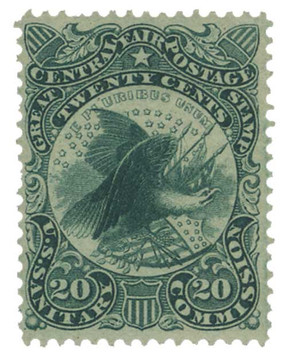
1864 10c Sanitary Fair Stamp, Red on Thin White Paper, Imperforate
$4,750.00
Share:
In 1861 the Secretary of War authorized the United States Sanitary Commission, and President Lincoln approved it that June. Its job was the health and comfort of Union troops. A study found that conditions in the camps were unsanitary almost everywhere. By the end of the war the Commission had raised $4.9 million in funds and another $15 million in supplies, and much of it came from fairs held in towns and cities across the North.
The fairs let people at home take part in the war effort. Women’s groups ran them, communities competed over donations, and big events such as the Metropolitan Fair in New York and the Great Central Fair in Philadelphia each raised more than $1 million. Many fairs set up their own post office so visitors could send letters and notes within the fair. The stamps were prepared for, sold, and used at those post offices. They were not valid for U.S. postage, and the sales raised money for the cause.
Only eight of the many Sanitary Fairs issued stamps, and each issue was made for an event that lasted days or weeks. Their use ended when the fair closed, so few were kept. Forgeries and reprints were made soon after the fairs and in later years, which is why genuine examples are prized. This 10 cent stamp comes from that group of local fair issues, a rare look at how ordinary communities raised money for the Union cause.
Related Items


Most Orders Ship
within 1 Business Day
90 Day Return Policy
Satisfaction Guaranteed
Earn Reward Points
for FREE Stamps & More