

Zoom the image with the mouse
#741
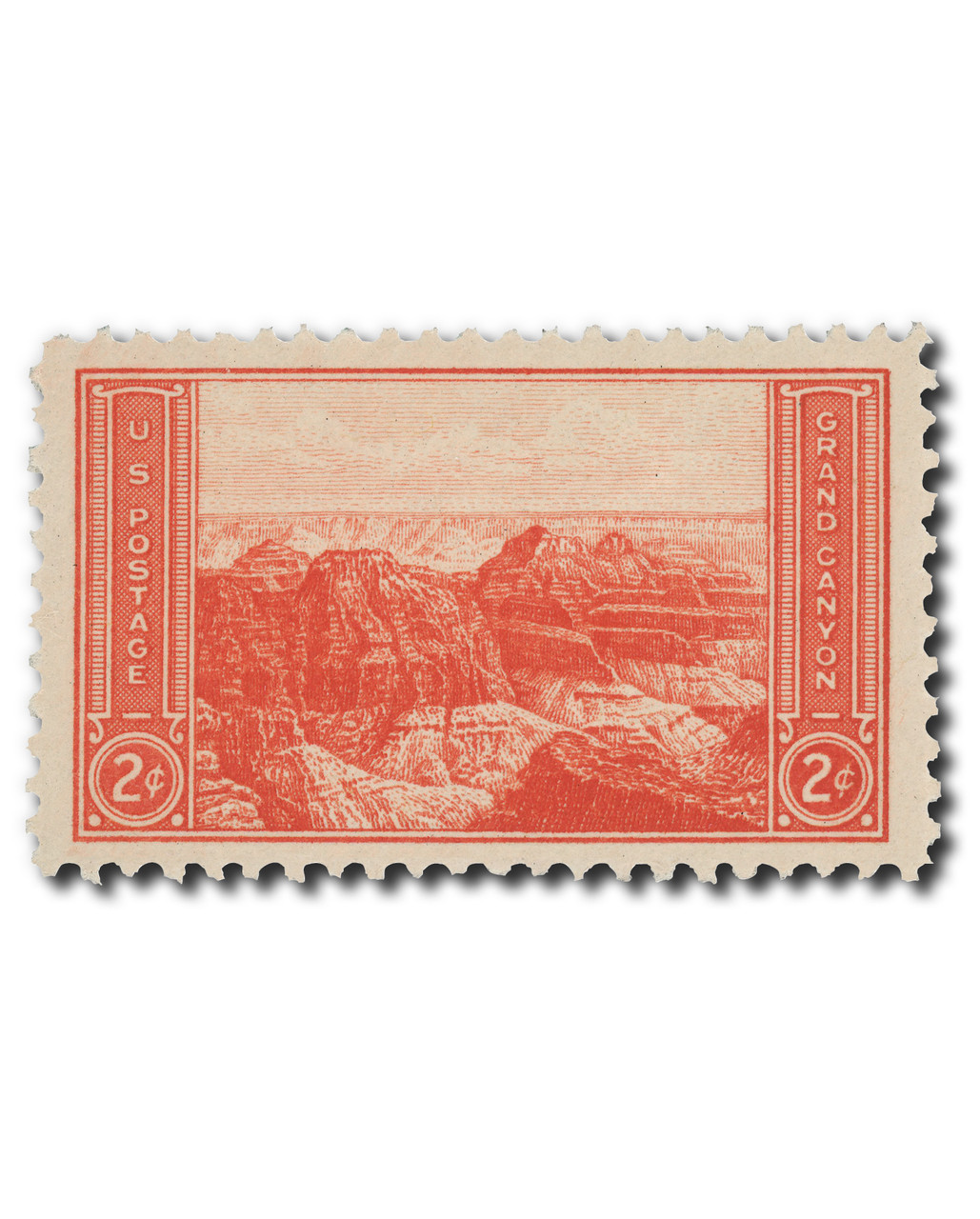
1934 2c Grand Canyon, Arizona, Red, Perf. 11
$0.75
Share:
U.S. #741
1934 2¢ Grand Canyon
National Parks Issue
Issue Date: July 24, 1934
First City: Grand Canyon, AZ
Quantity Issued: 74,400,200
Issued on July 24, 1934, in Grand Canyon, Arizona, this 2-cent stamp is part of one of the most beloved commemorative series in U.S. philatelic history — the 1934 National Parks issue. The series came about through the combined efforts of President Franklin D. Roosevelt, himself an avid stamp collector, and Secretary of the Interior Harold Ickes, who proposed using postage stamps to promote the national park system to an American public largely unaware of what the federal government had set aside for their enjoyment. Roosevelt approved the idea immediately, and ten parks were chosen, each assigned a different denomination from 1 cent to 10 cents. The Grand Canyon drew the 2-cent value, first placed on sale right at the canyon's rim. The stamp's design shows a sweeping view from the North Rim, with the layered canyon walls stretching toward the horizon — engraved by Gordon Trotter.
Grand Canyon National Park was established in 1919, though the canyon had been designated a national monument by President Theodore Roosevelt in 1908. The canyon stretches 277 miles along the Colorado River, reaches depths of more than a mile, and in places spans 18 miles from rim to rim. The first Europeans to see it were members of the Coronado expedition in 1540, but various Native American groups had inhabited the canyon for centuries before that. The rock exposed at the canyon's deepest levels is nearly two billion years old, making the Grand Canyon one of the most complete geological records on Earth.
This stamp also has a notable side story in philatelic history. Postmaster General James Farley had a habit of distributing sheets of stamps to friends and officials before they were officially issued — and the National Parks series was among those affected. The imperforate, ungummed special printings that resulted became known as "Farley's Follies," drawing sharp criticism from collectors and the press alike and eventually forcing the Post Office to make the special printings available to the public.
U.S. #741
1934 2¢ Grand Canyon
National Parks Issue
Issue Date: July 24, 1934
First City: Grand Canyon, AZ
Quantity Issued: 74,400,200
Issued on July 24, 1934, in Grand Canyon, Arizona, this 2-cent stamp is part of one of the most beloved commemorative series in U.S. philatelic history — the 1934 National Parks issue. The series came about through the combined efforts of President Franklin D. Roosevelt, himself an avid stamp collector, and Secretary of the Interior Harold Ickes, who proposed using postage stamps to promote the national park system to an American public largely unaware of what the federal government had set aside for their enjoyment. Roosevelt approved the idea immediately, and ten parks were chosen, each assigned a different denomination from 1 cent to 10 cents. The Grand Canyon drew the 2-cent value, first placed on sale right at the canyon's rim. The stamp's design shows a sweeping view from the North Rim, with the layered canyon walls stretching toward the horizon — engraved by Gordon Trotter.
Grand Canyon National Park was established in 1919, though the canyon had been designated a national monument by President Theodore Roosevelt in 1908. The canyon stretches 277 miles along the Colorado River, reaches depths of more than a mile, and in places spans 18 miles from rim to rim. The first Europeans to see it were members of the Coronado expedition in 1540, but various Native American groups had inhabited the canyon for centuries before that. The rock exposed at the canyon's deepest levels is nearly two billion years old, making the Grand Canyon one of the most complete geological records on Earth.
This stamp also has a notable side story in philatelic history. Postmaster General James Farley had a habit of distributing sheets of stamps to friends and officials before they were officially issued — and the National Parks series was among those affected. The imperforate, ungummed special printings that resulted became known as "Farley's Follies," drawing sharp criticism from collectors and the press alike and eventually forcing the Post Office to make the special printings available to the public.
Related Items


Most Orders Ship
within 1 Business Day
90 Day Return Policy
Satisfaction Guaranteed
Earn Reward Points
for FREE Stamps & More