



Zoom the image with the mouse
Video
#R132
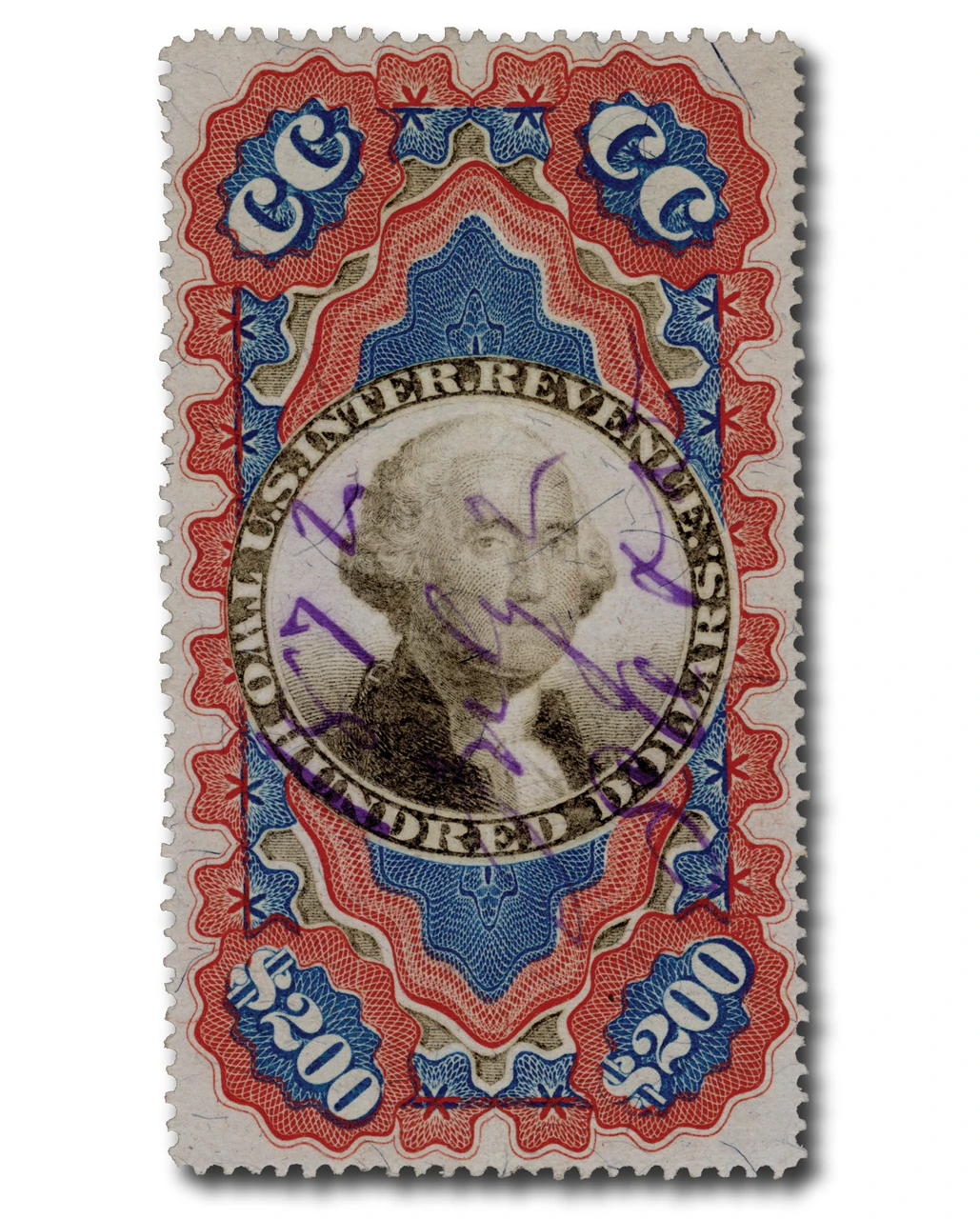
1871 $200 U.S. Internal Revenue Stamp, Red, Blue & Black, "Small Persian Rug"
$12,500.00
Share:
Some stamps you have to see to believe. US #R132, the 1871 $200 revenue stamp, is one of them. Rich red, blue, and black engraving surrounds a portrait of George Washington in patterns so detailed they look woven, which is how it earned its nickname, the "Small Persian Rug." It's one of the most intricate and beautiful designs ever printed on a US stamp. And right now, Mystic has one available for your collection.
When it was issued, this was the second-highest revenue denomination of its day. It paid the tax on some of the biggest transactions in America, like real estate transfers and railroad bonds.
The way it was printed is clever, too. The ink used for the center portrait of Washington was “fugitive,” meaning it would run or fade if anyone tried to wash the stamp. The red and blue frame inks were stable. This was a safeguard against fraud: if someone tried to clean off a cancel to reuse the stamp, Washington’s portrait would wash away with it, and the tampering would be obvious. And having the two different types of ink acted as a measure against counterfeiting.
Only about 121 Small Persian Rugs are known to survive today, and nearly all of them have faults. These large stamps were affixed to documents that were folded and filed away, so creases are common. The stamp we're offering you has held up far better than most. It's a used example with a purple manuscript cancel dated July 2, 1872, and it comes with a Philatelic Foundation certificate, which notes just a light vertical crease.
We seldom have a Small Persian Rug to offer, and with only one in stock, it won't be here long. We'll send it with a custom album page and a free mount, so it's ready for your collection the day it arrives. Make R132, the very special "Small Persian Rug," the centerpiece of your collection today.
Related Items


Most Orders Ship
within 1 Business Day
90 Day Return Policy
Satisfaction Guaranteed
Earn Reward Points
for FREE Stamps & More