

Zoom the image with the mouse
#3195
1998 32c Flowering Trees: Yellow Poplar
$2.75
Share:
US #3195
1998 Yellow Poplar
- From set picturing flowering trees from different geographical regions
- Issued the day before spring
- Features original paintings made to look like old prints
Stamp Category: Commemorative
Set: Flowering Trees
Value: 32¢, first Class Mail Rate
First Day of Issue: March 19, 1998
First Day City: New York, New York
Quantity Issued: 50,000,000
Printed by: Banknote Corporation of America
Printing Method: Offset, microprinting
Format: Pane of 20
Perforations: Die Cut 11.3
Why the stamp was issued: This is part of a set of stamps featuring five flowering trees from different regions of North America.
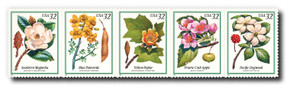
About the stamp design: John Dawson, a wildlife and nature artist created five original paintings in the style of old-fashioned botanical prints. Each stamp shows the tree’s blossom, leaves, stem, and fruit. The Latin and English names are at the bottom of the stamp.
Special design details: Each stamp contains a microprinted “USPS” hidden within the design. On the yellow poplar stamp, it is near the top of the upper flower pedal.
First Day City: The Flowering Trees stamps were dedicated during the opening of the Postage Stamp Mega-Event held in New York City.
About the Flowering Trees set: The set includes flowering trees found in different areas of the US. The Southern magnolia is found along the coastal plains of the southeastern US. The blue paloverde prefers the dry climate of the American Southwest. The yellow poplar is the only tulip tree native to North America. It grows in the East and Midwest. As the name suggests, the prairie crab apple is found in the prairies of the Midwest. The fifth tree is the Pacific dogwood, which grows in the river bottomlands and mountain slopes in the West.
History the stamp represents: One of the largest hardwoods in the eastern United States, the yellow poplar (Liriodendron tulipifera) is more commonly known as the tulip tree. It is, in fact, the only tulip tree native to North America, and only one of two tulip trees in the world. It is not actually related to true poplars but is rather a member of the magnolia family.
The yellow poplar is the tallest forest tree in the eastern United States. It can grow 200 feet high, and its base can be as wide as 5 to 10 feet. The tulip tree grows quickly and is resistant to diseases and pests. This tree thrives in rich, moist soil from Maine to Florida and as far west as Arkansas. It is the state tree of both Indiana and Tennessee.
The yellow poplar is important as an ornamental tree and for its timber. Its large flowers resemble tulips and are yellow to greenish-white in color with an orange band at the base. High on the tree, the flowers open during June and July, and they are a source of nectar for honeybees. The fruits are shaped like cones and contain many overlapping winged seeds. The broad green leaves change to yellow and orange in the fall. Yellow poplar wood is easily worked and is used for furniture, plywood panels, paper, boxes, and crates.
US #3195
1998 Yellow Poplar
- From set picturing flowering trees from different geographical regions
- Issued the day before spring
- Features original paintings made to look like old prints
Stamp Category: Commemorative
Set: Flowering Trees
Value: 32¢, first Class Mail Rate
First Day of Issue: March 19, 1998
First Day City: New York, New York
Quantity Issued: 50,000,000
Printed by: Banknote Corporation of America
Printing Method: Offset, microprinting
Format: Pane of 20
Perforations: Die Cut 11.3
Why the stamp was issued: This is part of a set of stamps featuring five flowering trees from different regions of North America.
About the stamp design: John Dawson, a wildlife and nature artist created five original paintings in the style of old-fashioned botanical prints. Each stamp shows the tree’s blossom, leaves, stem, and fruit. The Latin and English names are at the bottom of the stamp.
Special design details: Each stamp contains a microprinted “USPS” hidden within the design. On the yellow poplar stamp, it is near the top of the upper flower pedal.
First Day City: The Flowering Trees stamps were dedicated during the opening of the Postage Stamp Mega-Event held in New York City.
About the Flowering Trees set: The set includes flowering trees found in different areas of the US. The Southern magnolia is found along the coastal plains of the southeastern US. The blue paloverde prefers the dry climate of the American Southwest. The yellow poplar is the only tulip tree native to North America. It grows in the East and Midwest. As the name suggests, the prairie crab apple is found in the prairies of the Midwest. The fifth tree is the Pacific dogwood, which grows in the river bottomlands and mountain slopes in the West.
History the stamp represents: One of the largest hardwoods in the eastern United States, the yellow poplar (Liriodendron tulipifera) is more commonly known as the tulip tree. It is, in fact, the only tulip tree native to North America, and only one of two tulip trees in the world. It is not actually related to true poplars but is rather a member of the magnolia family.
The yellow poplar is the tallest forest tree in the eastern United States. It can grow 200 feet high, and its base can be as wide as 5 to 10 feet. The tulip tree grows quickly and is resistant to diseases and pests. This tree thrives in rich, moist soil from Maine to Florida and as far west as Arkansas. It is the state tree of both Indiana and Tennessee.
The yellow poplar is important as an ornamental tree and for its timber. Its large flowers resemble tulips and are yellow to greenish-white in color with an orange band at the base. High on the tree, the flowers open during June and July, and they are a source of nectar for honeybees. The fruits are shaped like cones and contain many overlapping winged seeds. The broad green leaves change to yellow and orange in the fall. Yellow poplar wood is easily worked and is used for furniture, plywood panels, paper, boxes, and crates.
Related Items
Save Up To 6%


Most Orders Ship
within 1 Business Day
90 Day Return Policy
Satisfaction Guaranteed
Earn Reward Points
for FREE Stamps & More